The Return of Enclosed Rooms: Why Privacy Is Back in Interior Design
Disclosure: This post may contain recommended products from various brands and retailers. Some links may be affiliate links, meaning I may earn a small commission at no extra cost to you if you make a purchase. I only share pieces I truly love and believe will bring warmth and beauty into your home. These commissions help fund this blog, allowing me to continue sharing expert interior design recommendations, insights, and inspiration. Thank you for your support!
For much of the past decade, open concept living was treated as the gold standard of modern design. Walls came down, sightlines expanded, and homes were designed to function as a single, continuous space. While this approach still works in certain contexts, a clear shift is underway. Enclosed rooms are returning, and with them, a renewed appreciation for privacy, separation, and intentional layout.
This change is not a nostalgic move backward. It reflects how homes are actually being used today and why flexibility, acoustic comfort, and emotional boundaries matter more than ever. This article explores why enclosed rooms are trending again and how this shift is reshaping residential design.
How open concept became the default
Open concept layouts gained popularity for practical reasons. They allowed smaller homes to feel larger, improved natural light flow, and supported informal living and entertaining.
They also aligned with a cultural shift toward casual lifestyles, where cooking, dining, and socialising happened simultaneously.
Over time, however, open concept moved from option to expectation, often applied without regard for lifestyle, household size, or long term use.
Why fully open layouts are being reconsidered
As homes began to absorb more functions, the limitations of fully open layouts became apparent. Noise travels easily, visual clutter is unavoidable, and privacy is difficult to achieve.
When kitchens, living areas, workspaces, and family zones share one open volume, competing activities create constant background stimulation.
For many homeowners, this has led to a desire for separation rather than expansion.
The influence of working from home
Remote and hybrid work has been one of the strongest drivers behind the return of enclosed rooms.
Open layouts struggle to support focus, confidentiality, and acoustic comfort. Even visually calm spaces can feel distracting when multiple activities overlap.
Enclosed rooms allow workspaces to function properly without dominating the rest of the home, restoring balance between professional and personal life.
Privacy as a form of comfort
Privacy is increasingly understood as a comfort feature rather than a luxury. Being able to close a door supports emotional regulation, focus, and rest.
Enclosed rooms allow individuals to retreat, reset, or concentrate without constant visual or auditory input.
This sense of control over one’s environment contributes significantly to wellbeing.
Visual calm and containment
Containment plays an important role in how spaces are experienced. Rooms with defined boundaries tend to feel calmer because they limit visual information.
In enclosed spaces, materials, colour, and lighting can be used more expressively without overwhelming the entire home.
This allows for richer, more layered interiors that still feel cohesive overall.
The rise of flexible separation
The return of enclosed rooms does not mean a return to dark, compartmentalised homes. Modern separation is more flexible and light conscious.
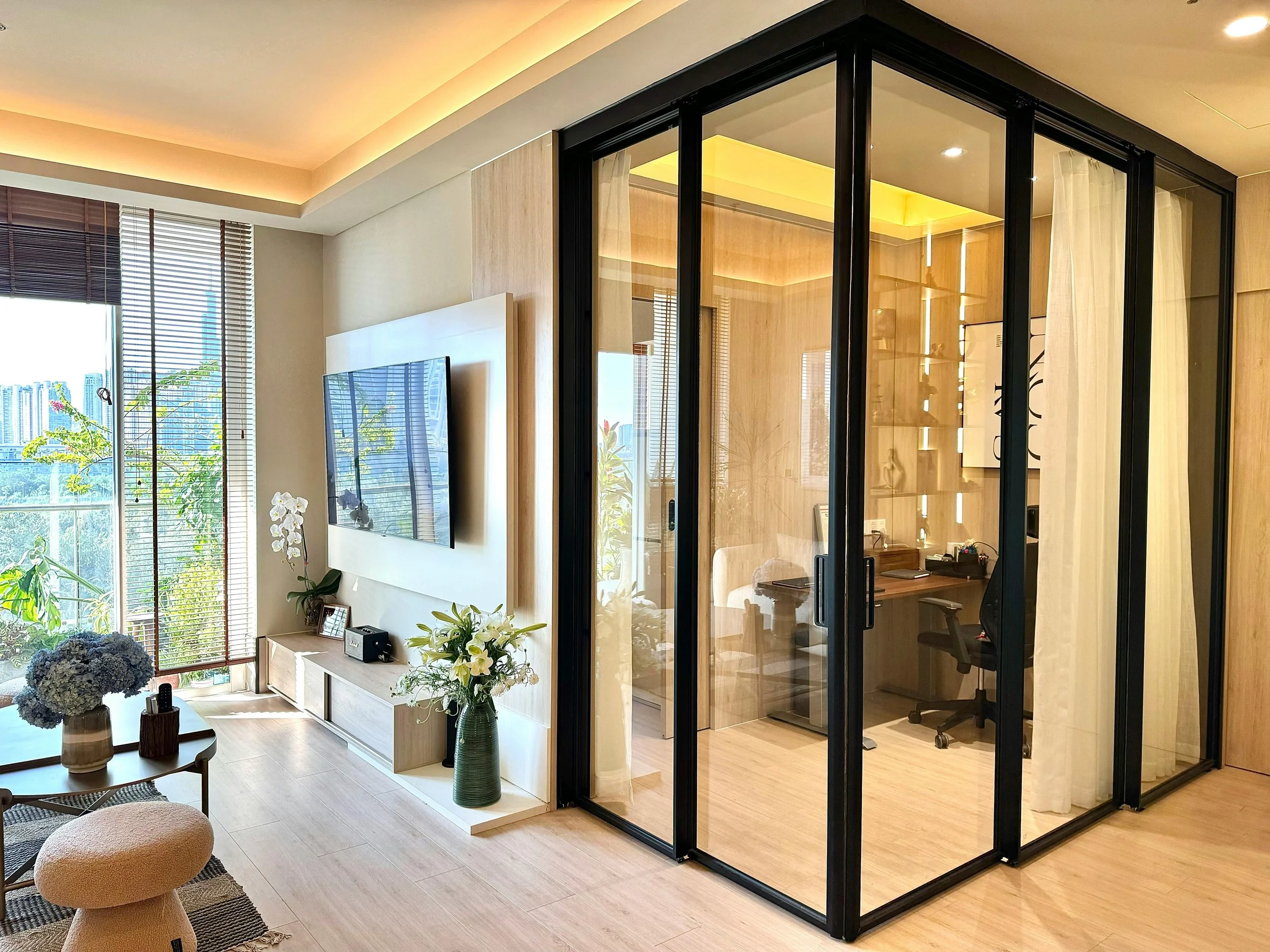
Sliding doors, pocket doors, interior glazing, and wide cased openings allow spaces to open and close as needed.
This flexibility supports both connection and separation, depending on the moment.
Why defined rooms support better design
Defined rooms allow designers to respond more precisely to function. Lighting, acoustics, furniture layout, and storage can be tailored to specific uses.
This results in spaces that perform better and feel more intentional.
Rooms designed with a clear purpose often age better than spaces forced to accommodate everything at once.
Enclosed rooms and emotional boundaries
Beyond function, enclosed rooms support emotional boundaries. They help separate work from rest, social time from solitude, and activity from recovery.
This separation reduces cognitive load and supports healthier daily rhythms.
Homes that offer choice in how space is experienced tend to feel more supportive long term.
How this shift affects family living
In family homes, enclosed rooms help manage different schedules, noise levels, and needs.
Children can play or study without overtaking shared spaces. Adults can work or relax without constant interruption.
This flexibility supports coexistence without conflict.
Design strategies for reintroducing enclosure
Reintroducing enclosure does not always require major renovation. Strategic changes can significantly improve spatial definition.
Area rugs, furniture orientation, ceiling treatments, and lighting zones can visually define rooms. Adding doors or partial walls can enhance separation without fully closing spaces off.
Even modest adjustments can restore a sense of structure.
Enclosed rooms in modern architecture
Contemporary architecture is increasingly embracing rooms within rooms. Rather than eliminating walls, designers are refining how spaces connect.
This approach values proportion, threshold, and transition rather than uninterrupted openness.
The result is homes that feel intentional, adaptable, and comfortable.
Avoiding the extremes of closed off design
While enclosure is returning, balance remains important. Over compartmentalisation can feel restrictive if not designed carefully.
Light, proportion, and circulation must be considered to ensure rooms feel connected even when separated.
Successful homes balance openness and privacy rather than choosing one exclusively.
Why this trend has strong longevity
The return of enclosed rooms is driven by lived experience rather than aesthetics. As long as homes continue to serve multiple roles, the need for separation will remain.
This makes the trend resilient to shifting styles. It addresses function, comfort, and wellbeing rather than visual fashion.
Design decisions rooted in these needs tend to endure.
The future of residential layouts
Future homes are likely to prioritise choice. Spaces will be designed to open up or close down depending on use.
Enclosed rooms will coexist with shared areas, creating homes that adapt to different moments and life stages.
This evolution reflects a more nuanced understanding of how space supports daily life.
Conclusion
The return of enclosed rooms signals a shift toward homes that prioritise privacy, comfort, and intentional design. Rather than rejecting openness, this movement refines it, introducing boundaries that support focus, calm, and flexibility.
As homeowners seek environments that feel emotionally supportive and adaptable, enclosed rooms are re emerging as a valuable and enduring design strategy. For modern living, separation is no longer a compromise. It is a feature.
Read More…
“I believe that if you are true to expressing yourself, coupled with the right amount of discipline and routine, your space can reflect your personality, and you can turn your home into your haven.”

The Complete Client Experience Template System
Discover a comprehensive, fully customisable suite of templates designed to guide you through every phase of your interior design projects.
From onboarding to approvals, proposals to presentations, this system supports a smoother, more polished process at every step.
Whether you're just starting out or refining your workflow, these templates help you lead with clarity, save time, and elevate your client experience from day one.