Quiet Luxury Interior Design: Principles for Creating Timeless, Understated Homes
Disclosure: This post may contain recommended products from various brands and retailers. Some links may be affiliate links, meaning I may earn a small commission at no extra cost to you if you make a purchase. I only share pieces I truly love and believe will bring warmth and beauty into your home. These commissions help fund this blog, allowing me to continue sharing expert interior design recommendations, insights, and inspiration. Thank you for your support!
Quiet luxury interior design has emerged as one of the most influential design movements in recent years, shaping how homeowners and designers think about quality, restraint, and long term value. Unlike trend driven aesthetics that rely on bold statements or rapid visual impact, quiet luxury is rooted in subtlety. It prioritises craftsmanship over logos, longevity over novelty, and atmosphere over display.
This approach resonates strongly in today’s cultural climate. As homes increasingly serve as places of retreat and restoration, quiet luxury offers a design language that feels calm, intentional, and deeply personal. This article explores the defining principles of quiet luxury interiors, why the movement has gained traction, and how to apply it thoughtfully in residential spaces.
Understanding what quiet luxury really means
Quiet luxury is often misunderstood as minimalism or a purely neutral aesthetic. While simplicity plays a role, quiet luxury is not about removing character or avoiding richness. Instead, it is about expressing refinement through restraint.
At its core, quiet luxury values materials, proportion, and craftsmanship over overt decoration. It avoids obvious status symbols in favour of elements that reveal their quality gradually. A stone floor that wears beautifully over time, custom millwork with precise detailing, or upholstery chosen for comfort and longevity all embody this philosophy.
The appeal of quiet luxury lies in how it feels rather than how it photographs. These interiors are designed to be lived in, appreciated slowly, and adapted over years rather than replaced.
Why quiet luxury has become a defining trend
The rise of quiet luxury is closely tied to broader cultural shifts. After years of fast trends and highly styled interiors designed for social media, many homeowners are seeking spaces that feel grounding and authentic.
Economic uncertainty has also influenced design priorities. Investing in fewer, better quality pieces aligns with a desire for financial and environmental responsibility. Quiet luxury supports this mindset by encouraging thoughtful purchasing and long term planning.
There is also a psychological component. Calm, cohesive interiors can reduce visual stress and support wellbeing. As homes have taken on more functions, from workspaces to sanctuaries, the demand for interiors that feel emotionally supportive has grown.
Focusing on material integrity
Material choice is one of the most important aspects of quiet luxury interior design. Rather than relying on contrast or ornament, these spaces derive richness from texture, depth, and natural variation.
Natural materials play a central role. Stone, wood, wool, linen, leather, and clay are commonly used for their tactile qualities and ability to age gracefully. Imperfections are often embraced, as they contribute to authenticity and warmth.
Finishes are typically matte or softly honed, avoiding high gloss surfaces that can feel reflective or show wear quickly. The goal is not perfection, but balance and durability.
When selecting materials, quiet luxury favours honesty. Materials are allowed to look and feel like themselves rather than being heavily treated or disguised.
Prioritising proportion and scale
In quiet luxury interiors, proportion is often more important than decoration. Well considered scale creates a sense of ease and visual harmony that feels effortless, even though it requires careful planning.
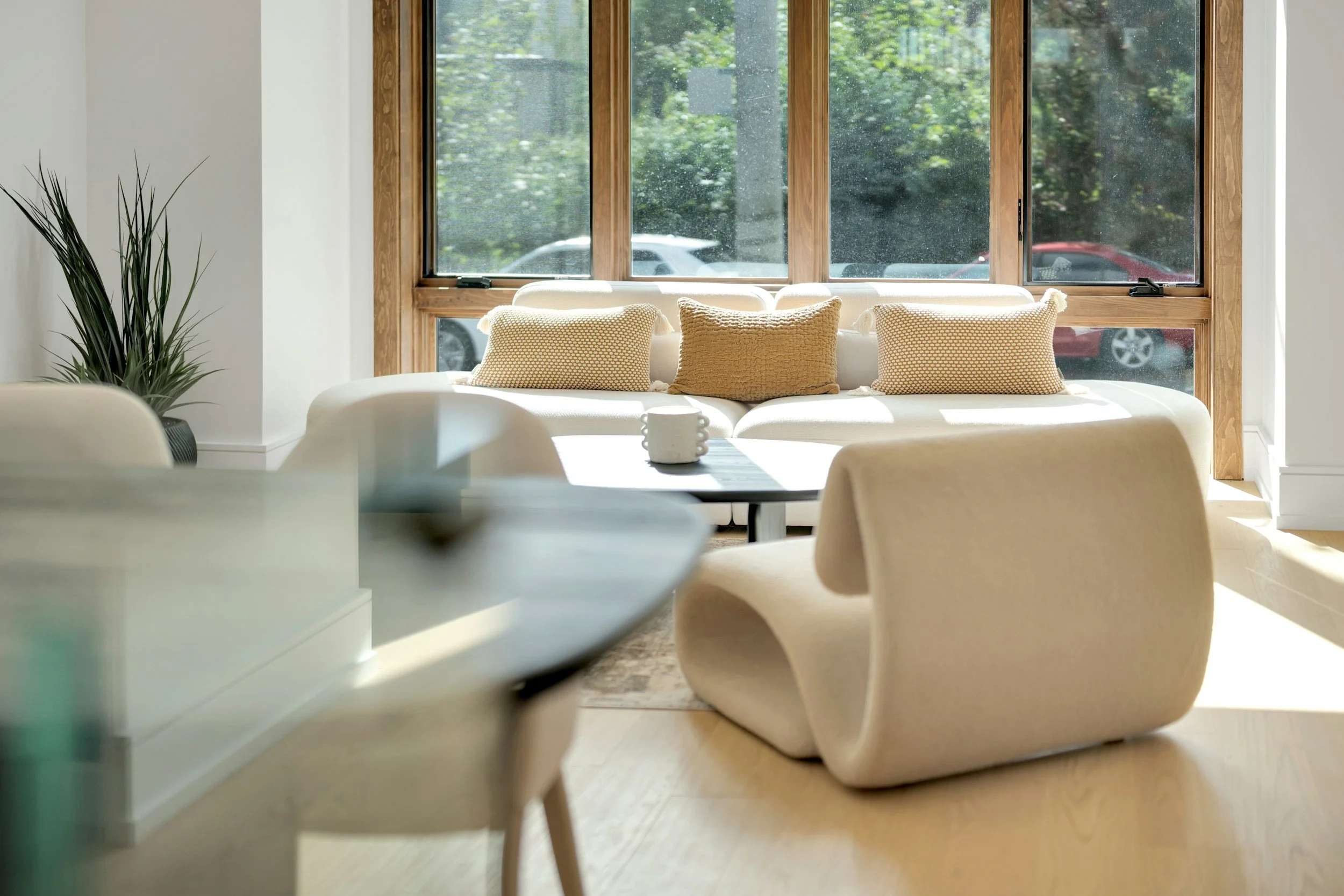
Furniture is chosen for comfort and presence rather than statement value. Oversized sofas with generous seating, dining tables with substantial thickness, and lighting fixtures that feel grounded rather than delicate all contribute to this effect.
Negative space is also essential. Allowing rooms to breathe by avoiding overfurnishing enhances the impact of each element. This restraint reinforces the sense of calm that defines quiet luxury.
Architectural details such as ceiling heights, window placement, and sightlines are considered as part of the overall composition. When these elements are balanced, the interior feels cohesive without needing embellishment.
Using colour as a supporting element
Colour palettes in quiet luxury interiors are typically muted and layered. Rather than stark monochromes, these spaces rely on tonal variation within a narrow range to create depth.
Warm neutrals such as soft whites, taupes, greiges, and earthy browns form the foundation. These hues are often complemented by subtle variations in texture and finish rather than strong colour contrasts.
Darker tones, when used, tend to be rich and grounded. Charcoal, deep olive, or muted navy can add weight and intimacy without overwhelming the space.
Colour transitions are gentle and intentional. Walls, trim, and ceilings may be closely related in tone, allowing light and shadow to define the room rather than colour shifts.
Emphasising craftsmanship and detail
Quiet luxury places high value on craftsmanship. Details are refined, precise, and often custom, but they are not meant to draw attention to themselves.
Joinery is clean and well proportioned. Hardware is minimal and tactile. Seams, edges, and transitions are carefully resolved so that nothing feels abrupt or unresolved.
This attention to detail extends to furnishings and accessories. Hand finished ceramics, artisanal textiles, and well made lighting fixtures add depth without visual clutter.
The absence of excess makes these details more noticeable. In a restrained environment, quality becomes more apparent.
Designing for comfort and liveability
Despite its refined appearance, quiet luxury is not formal or precious. Comfort is a fundamental principle, and interiors are designed to support daily life with ease.
Upholstery is selected for both feel and performance. Seating encourages relaxation rather than display. Rugs soften acoustics and add warmth underfoot.
Storage is discreet but generous, allowing everyday items to be hidden without feeling inaccessible. This supports visual calm while maintaining functionality.
Lighting is layered and adaptable. Soft ambient light creates atmosphere, while task lighting is integrated subtly to support practical needs.
Reducing visual noise through cohesion
One of the defining characteristics of quiet luxury interiors is visual cohesion. Rather than showcasing a collection of disparate styles or finishes, these spaces feel unified and intentional.
This cohesion is achieved by limiting the number of materials and repeating them throughout the home. A consistent wood tone, stone type, or metal finish creates continuity and reinforces a sense of flow.
Transitions between rooms are subtle. Flooring often remains consistent, and colour palettes evolve gently rather than shifting dramatically.
This approach does not eliminate personality. Instead, it allows personal choices to feel grounded within a coherent framework.
Incorporating sustainability and longevity
Quiet luxury aligns naturally with sustainable design principles. By valuing durability, repairability, and timelessness, it reduces the cycle of constant replacement.
High quality materials and construction methods extend the lifespan of interiors. Furniture and finishes are chosen with the expectation that they will age, develop patina, and remain relevant.
This mindset encourages fewer but better purchases. It also supports local artisans and manufacturers who prioritise craftsmanship over mass production.
Sustainability in quiet luxury is less about visible eco statements and more about responsible decision making at every stage of design.
Avoiding common misinterpretations
Quiet luxury is sometimes misapplied as a lack of personality or an overly restrained aesthetic. When executed without intention, spaces can feel flat or underwhelming.
The key is depth. Texture, proportion, and material variation are essential to prevent monotony. Subtle contrast, whether through light and shadow or soft tonal shifts, keeps the interior engaging.
Another common mistake is prioritising appearance over comfort. True quiet luxury is felt as much as it is seen. If a space looks refined but feels uninviting, the balance has been lost.
The future of quiet luxury interiors
As design continues to move away from fast cycles and visual excess, quiet luxury is likely to remain influential. Its emphasis on wellbeing, longevity, and authenticity aligns with long term lifestyle shifts rather than temporary tastes.
Future interpretations may incorporate more biophilic elements, adaptive layouts, and advancements in sustainable materials. However, the core principles of restraint, quality, and intentionality will remain central.
Quiet luxury will continue to evolve quietly, adapting to individual homes and personal values rather than dictating a fixed aesthetic.
Conclusion
Quiet luxury interior design offers a thoughtful alternative to trend driven decorating. By focusing on material integrity, proportion, comfort, and cohesion, it creates homes that feel calm, grounded, and enduring.
Rather than seeking attention, these interiors reward close observation and daily use. They reflect a deeper understanding of luxury as something personal, lived in, and long lasting.
For homeowners and designers seeking spaces that age gracefully and support modern living, quiet luxury provides a compelling and timeless framework.
Read More…
“I believe that if you are true to expressing yourself, coupled with the right amount of discipline and routine, your space can reflect your personality, and you can turn your home into your haven.”

The Complete Client Experience Template System
Discover a comprehensive, fully customisable suite of templates designed to guide you through every phase of your interior design projects.
From onboarding to approvals, proposals to presentations, this system supports a smoother, more polished process at every step.
Whether you're just starting out or refining your workflow, these templates help you lead with clarity, save time, and elevate your client experience from day one.