Modern Kitchen Design Principles for Timeless, Functional Homes
Disclosure: This post may contain recommended products from various brands and retailers. Some links may be affiliate links, meaning I may earn a small commission at no extra cost to you if you make a purchase. I only share pieces I truly love and believe will bring warmth and beauty into your home. These commissions help fund this blog, allowing me to continue sharing expert interior design recommendations, insights, and inspiration. Thank you for your support!
Modern kitchen design has evolved well beyond a fixed aesthetic. Today, it represents a set of principles that balance function, restraint, and longevity while adapting to changing lifestyles. Whether designing a new kitchen from the ground up or renovating an existing space, understanding these principles helps homeowners and designers create kitchens that feel current without becoming dated, efficient without feeling clinical, and refined without sacrificing warmth.
This article explores the foundational ideas that define modern kitchen design. Rather than focusing on short lived trends, it outlines enduring strategies that support everyday living, long term value, and architectural coherence.
Understanding what modern kitchen design really means
Modern kitchen design is often misunderstood as a specific look, typically associated with flat panel cabinetry, minimal ornamentation, and monochromatic palettes. In reality, modern design is a philosophy rooted in clarity, purpose, and thoughtful problem solving.
At its core, modern design prioritises function. Every element should earn its place through usefulness, durability, or contribution to the overall experience of the space. A modern kitchen is not defined by how little it contains, but by how intentionally it is designed.
This approach is especially relevant in contemporary homes where kitchens serve multiple roles. They are spaces for cooking, gathering, working, entertaining, and sometimes relaxing. Modern design responds to this complexity by creating layouts and systems that support flexibility while maintaining visual order.
Prioritising layout and spatial flow
One of the most important principles of modern kitchen design is an efficient, intuitive layout. The goal is to reduce friction in daily tasks while allowing the kitchen to feel open and connected to adjacent spaces.
The traditional work triangle concept remains relevant, but modern kitchens often expand on this idea. Instead of a strict triangle between sink, stove, and refrigerator, contemporary layouts consider zones. These may include food preparation, cooking, cleaning, storage, and social interaction.
Open plan living has also influenced kitchen layouts. Modern kitchens frequently open onto dining or living areas, which requires careful attention to sightlines and circulation. Clear pathways, consistent flooring, and visual alignment between spaces help maintain cohesion.
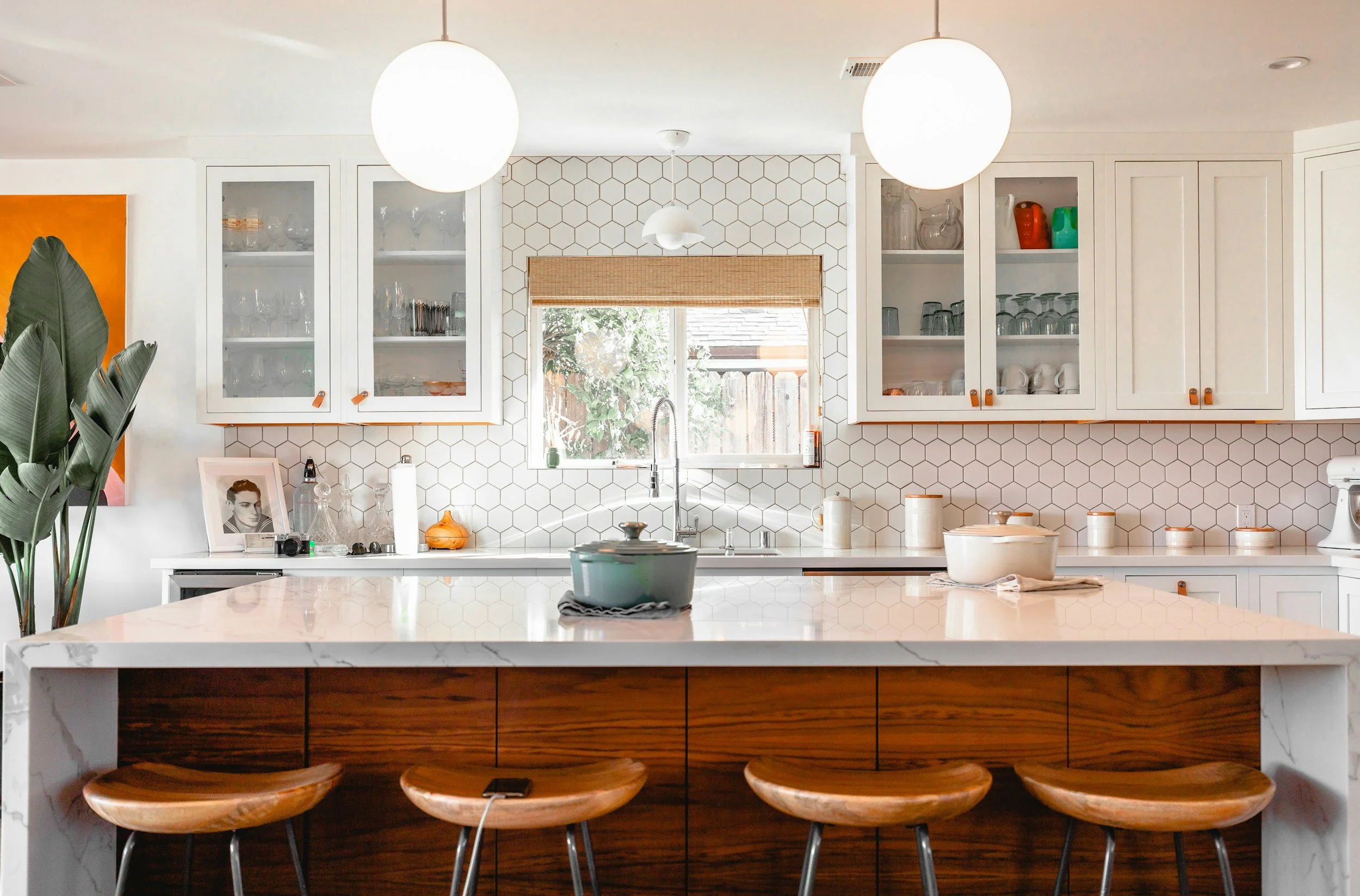
Island design plays a significant role in modern layouts. When thoughtfully planned, an island can serve as a prep surface, informal dining area, storage hub, and visual anchor. Proportions matter. An oversized island can overwhelm the room, while a poorly placed one can disrupt flow. Modern design favours balance and breathing room.
Embracing simplicity without sterility
Simplicity is a defining characteristic of modern kitchen design, but it should never feel cold or impersonal. The aim is to remove unnecessary visual noise, not to strip the space of character.
This is achieved through clean lines, consistent materials, and restrained detailing. Flat or subtly profiled cabinetry doors, integrated appliances, and streamlined hardware all contribute to a cohesive look.
At the same time, warmth can be introduced through texture, natural materials, and thoughtful lighting. Wood accents, stone surfaces, and tactile finishes soften the minimalism and make the kitchen inviting.
Modern kitchens benefit from a sense of calm. Visual continuity, achieved by limiting the number of finishes and colours, allows the eye to rest. This restraint creates a timeless quality that adapts well as tastes evolve.
Designing for function at every level
Functionality is non negotiable in modern kitchen design. A visually striking kitchen that fails to support daily routines quickly loses its appeal.
Storage planning is a key consideration. Modern kitchens rely on efficient, well organised storage solutions that reduce clutter and improve accessibility. Deep drawers, pull out pantries, corner solutions, and internal organisers help maximise usable space.
Cabinetry should be designed with specific needs in mind. Consider where everyday items are used and store them accordingly. Frequently used cookware should be near the cooking zone, while dishes and glassware should be accessible from the dishwasher.
Countertop space should be generous and thoughtfully distributed. Adequate prep areas near the sink and cooktop improve workflow, while uninterrupted surfaces support both cooking and casual gathering.
Modern design also considers ergonomics. Counter heights, appliance placement, and clearances should be tailored to the users. Small adjustments can significantly improve comfort and usability over time.
Integrating appliances seamlessly
Appliance integration is a hallmark of modern kitchen design. Rather than standing out as focal points, appliances are often concealed or visually aligned with cabinetry to maintain a cohesive appearance.
Panel ready refrigerators, integrated dishwashers, and built in wall ovens contribute to a streamlined look. When appliances are visible, modern design favours clean silhouettes and minimal detailing.
Functionality remains paramount. High performance appliances that support efficient cooking and energy use align well with modern principles. Smart technology can enhance convenience, but it should be used selectively and intuitively.
Ventilation is another important consideration. Effective range hoods are essential for air quality, especially in open plan homes. Modern kitchens often incorporate concealed or sculptural ventilation solutions that balance performance with aesthetics.
Choosing materials for longevity and performance
Material selection plays a critical role in the success of a modern kitchen. The best choices balance durability, maintenance, and visual appeal.
Cabinetry materials should be stable and well constructed. High quality finishes that resist moisture and wear ensure longevity. Matte and satin finishes are popular in modern design for their understated appearance and ability to hide fingerprints.
Countertops must withstand daily use while contributing to the overall design. Engineered stone, natural stone, and solid surface materials are commonly used for their durability and refined look. Each option has unique characteristics, and the choice should reflect lifestyle needs as well as aesthetic goals.
Backsplashes in modern kitchens are often simple and continuous. Full height slabs, large format tiles, or subtle textures provide protection without visual clutter.
Flooring should be durable, easy to clean, and visually integrated with the rest of the home. Modern kitchens often extend the same flooring into adjacent spaces to enhance continuity.
Using colour with intention
Colour in modern kitchen design is typically restrained but not absent. Neutral palettes remain popular for their versatility and timelessness, but modern design also allows for depth and contrast.
Soft whites, warm greys, and natural tones create a calm foundation. These hues work well with a variety of materials and lighting conditions. When darker colours are used, they are often balanced with lighter elements to maintain visual clarity.
Accent colours can be introduced through cabinetry, islands, or accessories, but they should be used sparingly. The goal is to create interest without overwhelming the space.
Colour choices should also consider the quality of light. Natural light, artificial lighting, and the orientation of the kitchen all influence how colours appear. Modern design accounts for these variables to ensure the space feels balanced throughout the day.
Layering lighting for function and atmosphere
Lighting is a critical yet often underestimated aspect of modern kitchen design. A well lit kitchen supports tasks, enhances materials, and contributes to overall ambience.
Modern kitchens rely on layered lighting. This typically includes ambient lighting for general illumination, task lighting for work areas, and accent lighting to highlight architectural features or materials.
Recessed ceiling lights provide even ambient light, while under cabinet lighting ensures countertops are well illuminated. Pendant lights over islands or dining areas add visual interest and define zones within the space.
Lighting fixtures in modern kitchens are usually simple in form, with clean lines and refined finishes. The focus is on quality of light rather than decorative excess.
Dimmable lighting allows the kitchen to adapt to different activities and moods, from busy mornings to relaxed evenings.
Connecting kitchen design to lifestyle
Modern kitchen design is deeply connected to how people live. The most successful kitchens reflect the habits, values, and priorities of their users.
For households that cook frequently, durable surfaces, ample prep space, and high performance appliances are essential. For those who entertain often, seating, flow, and visual appeal take on greater importance.
Families may prioritise easy maintenance, generous storage, and safety considerations. Empty nesters or downsizers might focus on efficiency and elegance.
Modern design supports these varied needs by offering flexible solutions that can be tailored without sacrificing cohesion. Customisation, when guided by clear principles, enhances both function and longevity.
Sustainability and responsible design
Sustainability is increasingly integral to modern kitchen design. Thoughtful choices can reduce environmental impact while improving indoor air quality and long term value.
Energy efficient appliances, LED lighting, and water saving fixtures contribute to lower resource use. Durable materials that age well reduce the need for frequent replacement.
Responsible sourcing of materials, including certified wood products and low emission finishes, supports healthier living environments.
Modern design encourages mindful consumption. By focusing on quality over quantity and timelessness over trends, kitchens can remain relevant and functional for decades.
Balancing trends with timeless design
While modern kitchens often reflect current tastes, they are not trend driven. The key is to distinguish between enduring principles and short lived styles.
Trends can be incorporated in subtle, reversible ways, such as through paint colours, lighting fixtures, or accessories. Core elements like layout, cabinetry, and major surfaces should be guided by timeless considerations.
This approach allows the kitchen to evolve gradually without requiring major renovations. A modern kitchen designed with longevity in mind will continue to feel relevant as styles shift.
The future of modern kitchen design
Looking ahead, modern kitchen design will continue to emphasise flexibility, sustainability, and integration. As homes adapt to changing work patterns and lifestyles, kitchens will play an even greater role as multifunctional spaces.
Advancements in materials and technology will offer new opportunities for efficiency and customisation. However, the underlying principles of clarity, purpose, and human centred design will remain constant.
Modern kitchens will increasingly blur the line between utility and living space, prioritising comfort and connection as much as performance.
Conclusion
Modern kitchen design is less about adhering to a specific look and more about embracing a thoughtful, principled approach to space. By focusing on function, simplicity, material integrity, and lifestyle alignment, it is possible to create kitchens that are both contemporary and enduring.
Whether working with a compact urban kitchen or a spacious open plan layout, these principles provide a framework for making informed decisions. The result is a kitchen that supports daily life, reflects personal values, and stands the test of time.
Read More…
“I believe that if you are true to expressing yourself, coupled with the right amount of discipline and routine, your space can reflect your personality, and you can turn your home into your haven.”

The Complete Client Experience Template System
Discover a comprehensive, fully customisable suite of templates designed to guide you through every phase of your interior design projects.
From onboarding to approvals, proposals to presentations, this system supports a smoother, more polished process at every step.
Whether you're just starting out or refining your workflow, these templates help you lead with clarity, save time, and elevate your client experience from day one.