Quiet Luxury in Interior Design: Why Understated Spaces Are Driving Modern Taste
Disclosure: This post may contain recommended products from various brands and retailers. Some links may be affiliate links, meaning I may earn a small commission at no extra cost to you if you make a purchase. I only share pieces I truly love and believe will bring warmth and beauty into your home. These commissions help fund this blog, allowing me to continue sharing expert interior design recommendations, insights, and inspiration. Thank you for your support!
Quiet luxury has become one of the most searched and discussed interior design concepts in recent months. Unlike trend driven aesthetics that rely on visual impact or recognisable statements, quiet luxury is defined by restraint, quality, and subtlety. Its growing popularity reflects a shift in values as homeowners prioritise longevity, comfort, and emotional ease over display.
Rather than announcing itself, quiet luxury is felt. It relies on proportion, material integrity, and thoughtful detailing to create interiors that feel refined without appearing designed. This article explores why quiet luxury is resonating so strongly right now and how to apply its principles in residential interiors for long term appeal.
Understanding what quiet luxury really means
Quiet luxury is not a style in the traditional sense. It is an approach to design that values quality over quantity and experience over image.
These interiors avoid obvious trends, logos, or high contrast statements. Instead, they focus on materials that age well, forms that feel balanced, and spaces that support daily life with ease.
Quiet luxury is about confidence rather than display, which makes it especially appealing in a saturated visual culture.
Why quiet luxury is trending so strongly
The rise of quiet luxury is closely linked to broader cultural shifts. After years of rapid change, economic uncertainty, and visual overload, many homeowners are seeking stability and calm.
Highly styled interiors can feel performative and demanding. Quiet luxury offers an alternative that feels grounded and emotionally supportive.
This concept also aligns with a growing desire for privacy and discretion, particularly in residential spaces.
The connection between quiet luxury and longevity
Longevity is central to quiet luxury. These interiors are designed to remain relevant over time rather than to impress immediately.
By prioritising proportion, material quality, and craftsmanship, quiet luxury reduces the need for frequent updates.
This long term mindset supports both sustainability and emotional attachment to the home.
Material integrity as a foundation
Materials play a defining role in quiet luxury interiors. Natural materials with inherent variation are favoured over synthetic or highly processed alternatives.
Stone, wood, wool, linen, and metal are chosen for their tactile qualities and ability to age gracefully. Finishes tend to be matte or softly honed rather than glossy.
Material integrity creates depth without visual noise.
Restrained colour palettes that feel rich
Quiet luxury interiors typically rely on restrained, tonal colour palettes. Rather than strong contrast, depth is achieved through subtle variation.
Warm neutrals, earth tones, and mineral inspired hues create a sense of cohesion and calm. These colours respond gently to light and season.
This approach allows spaces to feel rich without relying on colour as a statement.
The importance of proportion and scale
Proportion is often what separates quiet luxury from minimalism. While both value restraint, quiet luxury pays closer attention to how elements relate to one another.
Furniture is chosen for scale and comfort rather than trend relevance. Rooms feel balanced, not sparse.
When proportion is right, spaces feel effortless rather than intentional.
Craftsmanship over decoration
Quiet luxury favours craftsmanship over decoration. Details are subtle but considered.
Joinery, tailoring, and finish quality replace ornamentation. Hardware feels substantial without being attention seeking.
This focus on how things are made contributes to the sense of refinement.
Lighting that supports atmosphere
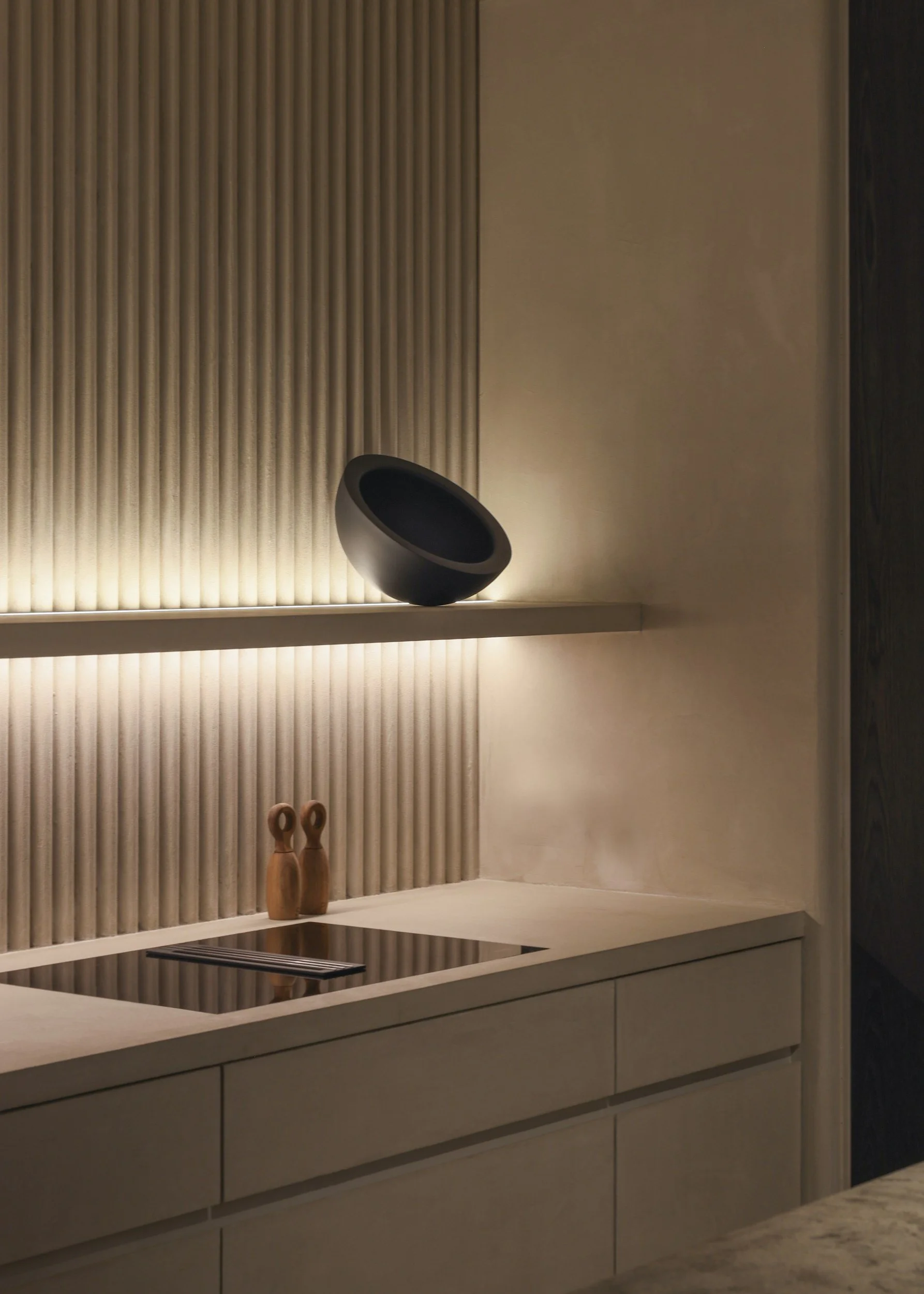
Lighting in quiet luxury interiors is soft, layered, and intentional. It enhances materials rather than dominating the space.
Warm light temperatures, concealed sources, and carefully placed fixtures create a gentle atmosphere.
Lighting is used to shape mood and experience rather than to showcase features.
Furniture that feels lived in, not staged
Furniture in quiet luxury interiors prioritises comfort and usability. Pieces invite use rather than admiration.
Upholstery is tactile, silhouettes are relaxed, and arrangements support conversation and rest.
This approach reinforces the idea of the home as a lived environment rather than a curated display.
Quiet luxury across different home styles
Quiet luxury adapts well across architectural styles. In modern homes, it softens clean lines. In traditional homes, it refines rather than modernises.
Because it is principle based, quiet luxury does not impose a specific aesthetic. It responds to context.
This adaptability contributes to its broad appeal and strong search performance.
Avoiding common misinterpretations of quiet luxury
A common misconception is that quiet luxury is minimal or bland. In reality, it is layered and nuanced.
Another is that it requires high budgets. While quality is important, quiet luxury is more about selection and restraint than cost.
Thoughtful editing often achieves more than added expense.
Why quiet luxury performs well in search
Quiet luxury resonates because it addresses multiple concerns at once. It speaks to longevity, sustainability, comfort, and emotional wellbeing.
It also aligns with wider lifestyle conversations around mindful consumption and intentional living.
This relevance makes it a powerful topic for organic search and long term traffic.
The future of quiet luxury interiors
Quiet luxury is likely to evolve rather than disappear. As design continues to move toward human centred values, its principles will become more embedded.
Future interpretations may explore new materials or technologies, but the emphasis on restraint and quality will remain.
Quiet luxury reflects a broader maturity in how homes are designed and valued.
Conclusion
Quiet luxury represents a shift away from performative interiors toward spaces that feel calm, refined, and deeply supportive of daily life. Through material integrity, thoughtful proportion, and restrained expression, these interiors offer lasting appeal.
For homeowners seeking design that feels sophisticated without being showy, quiet luxury provides a framework that aligns beauty with longevity and comfort. It is not a passing trend, but a reflection of changing values in how we live.
Read More…
“I believe that if you are true to expressing yourself, coupled with the right amount of discipline and routine, your space can reflect your personality, and you can turn your home into your haven.”

The Complete Client Experience Template System
Discover a comprehensive, fully customisable suite of templates designed to guide you through every phase of your interior design projects.
From onboarding to approvals, proposals to presentations, this system supports a smoother, more polished process at every step.
Whether you're just starting out or refining your workflow, these templates help you lead with clarity, save time, and elevate your client experience from day one.