Japandi Interior Design: Why This Calm, Minimal Style Continues to Dominate Search
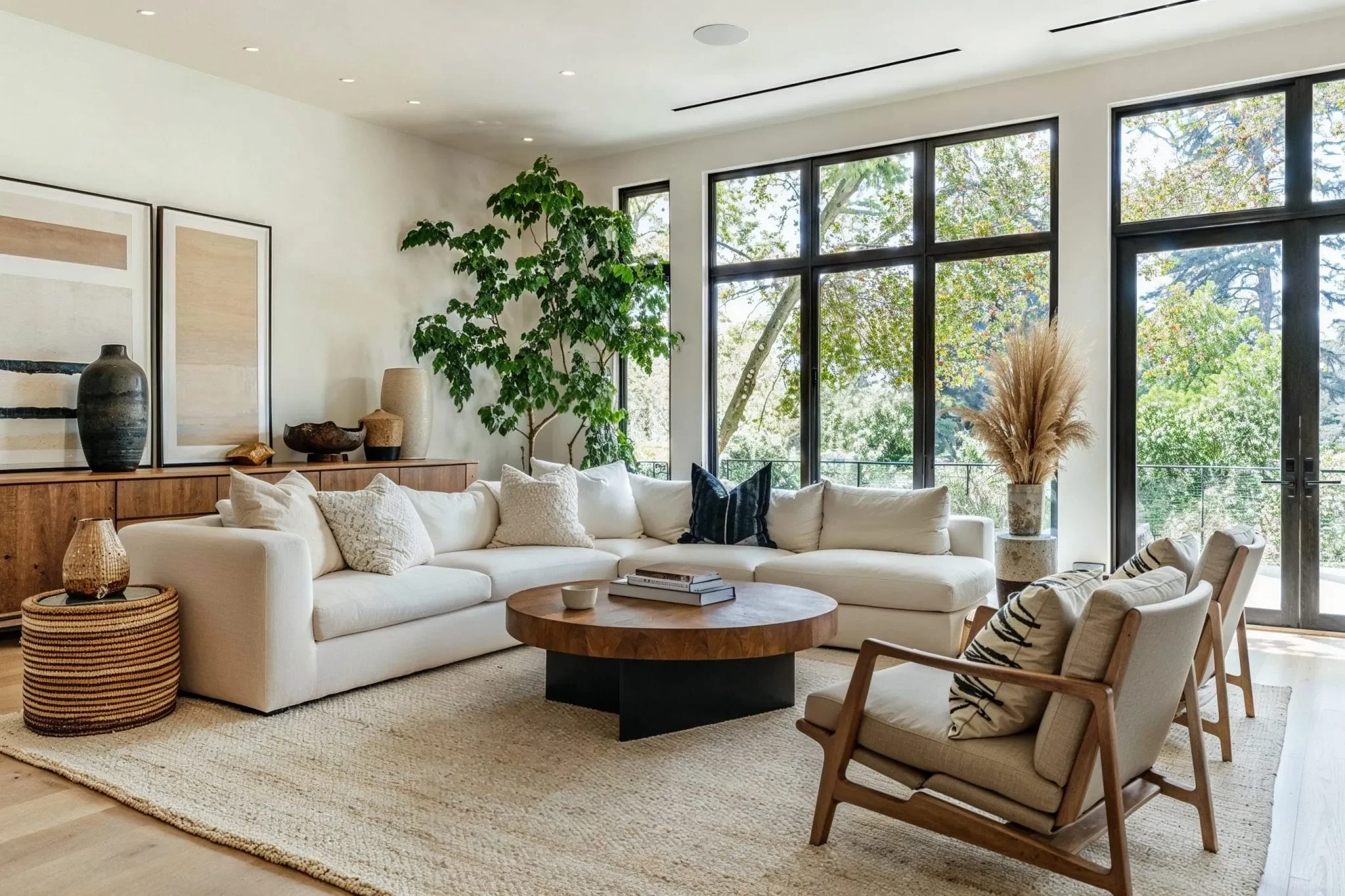
Image credit; decorilla.com
Disclosure: This post may contain recommended products from various brands and retailers. Some links may be affiliate links, meaning I may earn a small commission at no extra cost to you if you make a purchase. I only share pieces I truly love and believe will bring warmth and beauty into your home. These commissions help fund this blog, allowing me to continue sharing expert interior design recommendations, insights, and inspiration. Thank you for your support!
Japandi interior design remains one of the most consistently searched and widely adopted design movements, and its relevance continues to grow rather than fade. Combining the restraint of Japanese design with the warmth of Scandinavian interiors, Japandi offers a balanced approach that feels calm, functional, and deeply livable.
Unlike trend driven styles that peak quickly, Japandi has demonstrated unusual staying power. Its principles align closely with long term lifestyle shifts toward simplicity, comfort, and intentional living. This article explores why Japandi interior design continues to perform so strongly in search, what defines it beyond surface aesthetics, and how to apply it in a way that feels timeless rather than formulaic.
Understanding what Japandi design really is
Japandi is not simply a visual blend of two styles. At its core, it is a shared philosophy built on restraint, craftsmanship, and respect for materials.
Japanese design contributes clarity, asymmetry, and an appreciation for negative space. Scandinavian design adds warmth, functionality, and approachability. Together, they create interiors that feel grounded rather than stark.
True Japandi design focuses on how a space is experienced rather than how much it contains.
Why Japandi continues to trend year after year
Japandi’s sustained popularity is closely tied to changing lifestyle values. As homes take on more emotional responsibility, people are drawn to environments that feel calm and supportive rather than stimulating.
Search interest remains high because Japandi addresses multiple concerns at once. It offers minimalism without coldness, simplicity without austerity, and modernity without excess.
This balance makes it especially appealing to homeowners seeking longevity rather than novelty.
The role of calm and visual clarity
Visual calm is central to Japandi interiors. These spaces avoid unnecessary contrast, ornamentation, and visual clutter.
Colour palettes are restrained, forms are simple, and layouts are intuitive. This reduces cognitive load and supports mental ease.
Japandi interiors often feel quiet, but never empty. Each element earns its place.
Natural materials as a foundation
Material integrity is essential to Japandi design. Natural materials provide warmth, texture, and authenticity.
Wood is central, often in lighter or mid tone finishes with visible grain. Stone, clay, linen, wool, and paper based textures add depth without visual noise.
These materials age gracefully, reinforcing the sense of longevity that defines Japandi interiors.
Colour palettes rooted in nature
Japandi colour palettes are inspired by natural landscapes rather than trends. Soft neutrals, muted earth tones, warm greys, and mineral hues create a cohesive foundation.
Contrast is subtle and tonal rather than graphic. This allows the space to feel layered without feeling busy.
Because these colours are not tied to a specific era, they remain adaptable over time.
Furniture that prioritises function and comfort
Furniture in Japandi interiors is low profile, simple in form, and highly functional. Pieces are chosen for comfort and proportion rather than visual statement.
Clean lines are softened through material choice and scale. Seating encourages rest, and layouts support ease of movement.
This emphasis on use rather than display supports everyday living.
The importance of negative space
Negative space is not empty space. In Japandi design, it is an active element that allows the eye and mind to rest.
Rooms are not filled to capacity. Instead, space is left around furniture and objects to create balance and clarity.
This intentional restraint contributes significantly to the calm associated with Japandi interiors.
Japandi and the rise of slower living
Japandi aligns naturally with slower living principles. Both emphasise intention, quality, and presence.
Homes designed in this way encourage mindful routines, fewer possessions, and deeper appreciation of materials and craftsmanship.
This philosophical alignment helps explain why Japandi remains relevant even as other styles cycle out.
Lighting that supports atmosphere
Lighting in Japandi interiors is soft and layered. Harsh overhead lighting is avoided in favour of ambient and indirect sources.
Paper lanterns, fabric shades, and diffused fixtures create warmth and softness. Light is used to shape atmosphere rather than highlight features.
This approach reinforces the sense of calm and intimacy.
Japandi in modern and traditional homes
Japandi design adapts well to a wide range of architectural contexts. In modern homes, it softens minimal architecture. In traditional homes, it simplifies without erasing character.
Because it is principle based, Japandi responds to the existing structure rather than imposing a rigid aesthetic.
This adaptability contributes to its broad appeal and strong SEO performance.
Common mistakes when applying Japandi style
One common mistake is treating Japandi as a decorative look rather than a design philosophy. Adding a few Japanese or Scandinavian elements without addressing layout, restraint, and materiality often feels superficial.
Another mistake is over editing. While restraint is important, Japandi interiors should still feel warm and lived in.
Balance between simplicity and comfort is essential.
Japandi and sustainability
Japandi naturally supports sustainable design. It prioritises fewer, better quality items and materials that age well.
This reduces waste and discourages frequent replacement. Longevity is built into the aesthetic rather than added as an afterthought.
This alignment with sustainability further reinforces Japandi’s long term relevance.
Why Japandi performs so well in search
Japandi remains popular in search because it offers clarity in an overwhelming design landscape. It answers a common question homeowners are asking: how to simplify without sacrificing warmth.
Its adaptability, longevity, and emotional comfort make it relevant across demographics and regions.
As long as these needs persist, Japandi will continue to perform strongly.
The future of Japandi interior design
Japandi is likely to evolve subtly rather than disappear. Future interpretations may explore darker woods, deeper earth tones, or more expressive textures.
However, the core principles of restraint, material integrity, and calm will remain.
Japandi’s staying power lies in its alignment with human needs rather than visual novelty.
Conclusion
Japandi interior design continues to dominate search because it offers a thoughtful response to modern living. By combining clarity with warmth and restraint with comfort, it creates homes that feel calm, grounded, and enduring.
Rather than a passing trend, Japandi represents a design philosophy that supports long term living and emotional wellbeing. For homeowners seeking timeless simplicity without sterility, Japandi remains one of the most compelling interior design approaches available.
Read More…
“I believe that if you are true to expressing yourself, coupled with the right amount of discipline and routine, your space can reflect your personality, and you can turn your home into your haven.”

The Complete Client Experience Template System
Discover a comprehensive, fully customisable suite of templates designed to guide you through every phase of your interior design projects.
From onboarding to approvals, proposals to presentations, this system supports a smoother, more polished process at every step.
Whether you're just starting out or refining your workflow, these templates help you lead with clarity, save time, and elevate your client experience from day one.