How to Style a Coffee Table Like a Designer
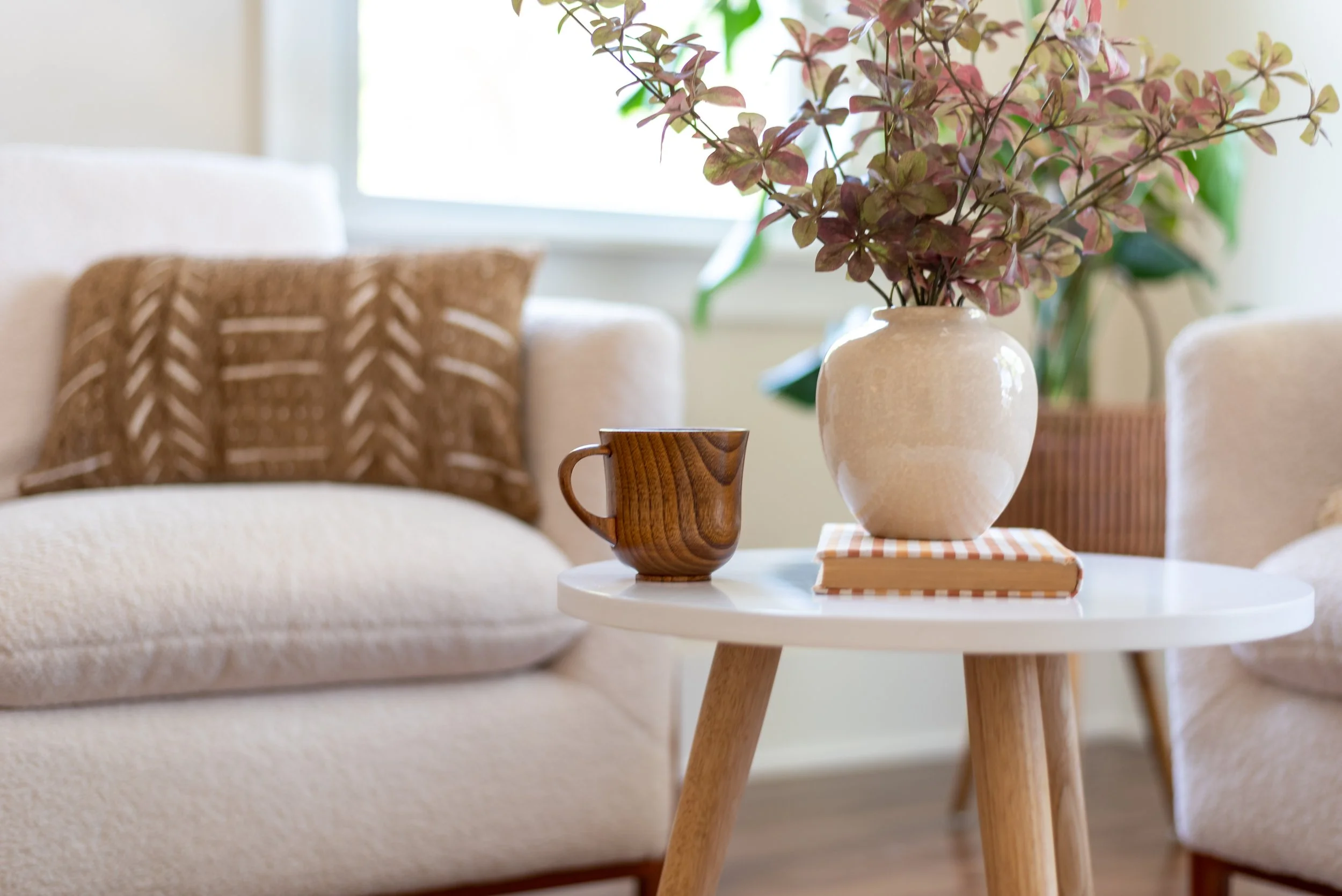
Disclosure: This post may contain recommended products from various brands and retailers. Some links may be affiliate links, meaning I may earn a small commission at no extra cost to you if you make a purchase. I only share pieces I truly love and believe will bring warmth and beauty into your home. These commissions help fund this blog, allowing me to continue sharing expert interior design recommendations, insights, and inspiration. Thank you for your support!
A coffee table holds a surprisingly powerful role in interior design. While it may seem like a simple piece of furniture, it sits at the centre of the living room—often the most social, lived-in space in a home. It anchors seating arrangements, influences traffic flow, and serves as a surface for both practical and decorative elements. When styled well, a coffee table becomes a curated display of personality and aesthetic sensibility. It has the ability to pull a room together, add architectural interest, and showcase your unique style.
Styling a coffee table like a designer isn’t about filling every inch with objects or following rigid rules. Instead, it’s about creating visual harmony and thoughtful composition. Whether you favour minimalism, modern elegance, organic textures, eclectic charm, or a well-travelled aesthetic, the right combination of pieces can transform the table from ordinary to eye-catching. This comprehensive guide will walk you through the principles designers use, the essential elements every coffee table display benefits from, and tips for tailoring your arrangement to work beautifully with any table shape or room layout.
The Basics of Coffee Table Styling
1. Start with a Clean Slate
Before you begin styling, the simplest—and often most overlooked—step is to completely clear the table. Remove old magazines, stray remote controls, half-burned candles, and anything that has built up over time. When you start with a blank canvas, you’re able to look at the table and the room with fresh eyes.
This step allows you to:
Evaluate the scale of your table. A small round table needs a different approach from a large rectangular one.
Consider the materials. A glass table may call for more substantial pieces to ground it, while a heavy reclaimed-wood table may benefit from softer, lighter accessories.
Examine the surrounding environment. Think about your sofa, rug, lighting, and colour palette. A coffee table display should feel connected to the rest of the room, not like a separate vignette.
Define your theme. From coastal calm to urban modern to boho luxury, identifying your direction early keeps the styling intentional.
Starting clean prevents clutter and helps you thoughtfully build a layered, beautiful display.
2. Use the Rule of Three
One of the most popular interior design principles, the rule of three is rooted in visual psychology. Odd-numbered groupings appear more natural, dynamic, and interesting to the eye than even-numbered arrangements.
To apply the rule of three effectively:
Mix heights. Combine short, medium, and tall objects to create a sense of depth.
Use varied shapes. Pair a cylindrical vase with a rectangular book stack and a round bowl, for example.
Incorporate multiple textures. Think smooth ceramic, warm wood, polished metal, woven rattan, crisp pages, reflective glass—the differences make the display more engaging.
Balance weight. If one item is visually heavy (e.g., a thick marble bowl), pair it with lighter, more delicate pieces to keep the composition from feeling lopsided.
While the rule of three is a great foundation, you don’t have to follow it religiously. Some coffee tables look stunning with a single bold object or a more layered arrangement. However, understanding the rule helps you style with purpose and avoid overcrowding.
Essential Elements for Coffee Table Styling
1. A Decorative Tray
A tray is one of the most versatile accessories you can use when styling a coffee table. Designers love trays because they instantly establish structure. Instead of loose items floating across the surface, a tray acts as an anchor, containing your display and preventing visual chaos.
When choosing a tray:
Opt for contrast. If your coffee table is dark wood, consider a lighter-coloured tray; if your table is glass or marble, a natural texture like wood or rattan can add warmth.
Think about shape. Rectangular trays work well on most tables, while round trays pair beautifully with round tables or soften an angular layout.
Choose a material that adds texture. Wood brings warmth, marble introduces luxury, metal adds modernity, and woven fibres bring an organic touch.
Use the tray to house small objects such as candles, matches, coasters, decorative beads, or a small vase. It helps maintain order, especially if you actually use your coffee table daily.
2. Books for Height and Interest
Coffee table books are a classic designer tool for a reason. They serve as both décor and a reflection of your interests, hobbies, or inspirations.
To style with books:
Choose titles with attractive covers. Art, travel, architecture, design, fashion, and photography books often work best because they feature bold imagery and thoughtful typography.
Stack in groups of two or three. This creates height that visually supports smaller objects placed on top.
Use them as a foundational layer. A candle, decorative object, or small plant sitting atop a book stack instantly feels more intentional.
Tie the colours into your palette. The spine or cover can subtly echo colours from your textiles or wall art.
Books add height, colour, and sophistication without overwhelming the table.
3. A Statement Object
Every beautifully styled coffee table has a moment—a focal point that captures attention. A statement object is your opportunity to express personality and individuality.
A statement object could be:
A modern sculpture
A handmade ceramic vessel
A striking bowl filled with beads or natural elements
A vintage find from your travels
A piece of coral or driftwood
An artisanal candle holder
A crystal or geode
A quirky, conversation-starting artefact
The key is choosing something unique that tells a story or highlights your personal taste. Make sure it’s substantial enough to feel intentional but not so large that it overwhelms the table.
4. Greenery or Fresh Flowers
Nothing enlivens a space faster than plants or flowers. They add freshness, movement, and an organic quality that contrasts beautifully with harder surfaces like wood or metal.
You can incorporate nature in several ways:
Fresh flowers: Seasonal blooms, tall stems, or a classic arrangement all add elegance.
Green plants: Small potted plants, trailing vines, or leafy branches bring vibrant colour.
Dried botanicals: Pampas, eucalyptus, or dried branches offer texture with long-lasting convenience.
Succulents: A great low-maintenance option that works well in modern or minimalist settings.
Use greenery to soften the space, introduce colour, and create visual life.
5. Candles or Ambient Lighting
Lighting isn’t limited to floor lamps and overhead fixtures. A coffee table is an excellent place to introduce soft, warm ambiance.
Consider:
Scented candles that complement the mood of the room.
Taper candles in decorative holders for height and sophistication.
Lanterns or hurricane jars for a sculptural, structured touch.
Flameless candles for a worry-free, child- or pet-friendly alternative.
Candles add atmosphere and warmth while contributing shape and style to your overall display.
Styling Tips Based on Table Shape
Not all coffee tables are created equal. The size and shape of your table should influence both the scale and arrangement of your décor.
Rectangular Coffee Tables
Rectangular tables offer the most styling versatility, as they provide ample space and clean lines.
For a balanced layout:
Divide the surface into two or three distinct sections. Think of it as creating mini vignettes.
Use a long tray in the centre, and balance each side with books or sculptural pieces.
Incorporate symmetry if your room leans traditional, or asymmetry for a more modern feel.
Anchor one end with height—like a tall vase—with the opposite end featuring lower-profile items to create equilibrium.
This shape is ideal for layered styling without the risk of clutter.
Round Coffee Tables
Round tables have a softer, more organic presence and benefit from curved arrangements.
To style them:
Start with a central anchor, such as a round tray or statement bowl.
Arrange items in a circular flow, echoing the shape of the table.
Use varying heights, but be careful not to overcrowd the centre.
Stick to a few key objects to keep the arrangement cohesive and uncluttered.
Round tables excel at highlighting one strong centerpiece supported by a few complementary accents.
Square Coffee Tables
Square tables offer structure and symmetry but can feel visually heavy if not styled thoughtfully.
Tips for square tables:
Divide the table into quadrants and treat each as a mini vignette.
Mix tall and short pieces to prevent the display from feeling flat.
Use one large tray to create cohesion and break up the space.
Leave some negative space, especially near the corners, to avoid a crowded appearance.
Square tables benefit from a balanced arrangement that’s curated but not overly busy.
Advanced Styling Techniques Designers Use
To elevate your styling even further, consider these designer-level techniques that add sophistication and nuance.
Play with Scale and Proportion
The interplay between small, medium, and large objects creates movement. A tiny trinket next to a tall vase feels playful and artistic, while an oversized bowl next to a stack of slim books feels grounded and intentional.
Add Layers
Layering isn’t just about stacking—it’s about visual depth. Layer coasters on top of a book, place a chain-link décor piece across a tray, or drape a string of beads over a sculpture.
Incorporate Personal Touches
A coffee table should tell your story. Incorporate items like:
A small framed photo
A meaningful travel object
Heirloom pieces
Objects tied to your hobbies—photography, art, music, cooking, etc.
These elements prevent your space from looking overly staged.
Balance Practicality with Aesthetics
Your coffee table still needs to function as a surface for everyday use.
Keep practical items accessible by:
Leaving room for drinks
Using trays to quickly move items when needed
Choosing durable pieces suitable for daily handling
Let the Seasons Inspire You
Update your styling throughout the year:
Spring: Soft florals, pastel tones, fresh greenery
Summer: Nautical touches, lighter materials, coastal textures
Autumn: Earthy colours, pumpkins, warm wood, dried stems
Winter: Candles, metallic accents, layered textures
Small updates keep the space feeling fresh and intentional.
Final Thoughts
Styling a coffee table like a designer involves balancing function with beauty, simplicity with interest, and structure with personality. By incorporating trays, books, statement objects, greenery, and lighting, you create a thoughtfully curated display that enhances your living room’s aesthetic while remaining practical for everyday life.
Remember that great design doesn’t have to be complicated—it simply needs to be intentional. Start with key foundational pieces, layer thoughtfully, and let your personal style guide the final look. Whether your arrangement is minimal and elegant or layered and eclectic, your coffee table can become a captivating focal point that ties your entire space together.
“I believe that if you are true to expressing yourself, coupled with the right amount of discipline and routine, your space can reflect your personality, and you can turn your home into your haven.”

The Complete Client Experience Template System
Discover a comprehensive, fully customisable suite of templates designed to guide you through every phase of your interior design projects.
From onboarding to approvals, proposals to presentations, this system supports a smoother, more polished process at every step.
Whether you're just starting out or refining your workflow, these templates help you lead with clarity, save time, and elevate your client experience from day one.