How to Design a Home That Feels Light Without Feeling Cold
Disclosure: This post may contain recommended products from various brands and retailers. Some links may be affiliate links, meaning I may earn a small commission at no extra cost to you if you make a purchase. I only share pieces I truly love and believe will bring warmth and beauty into your home. These commissions help fund this blog, allowing me to continue sharing expert interior design recommendations, insights, and inspiration. Thank you for your support!
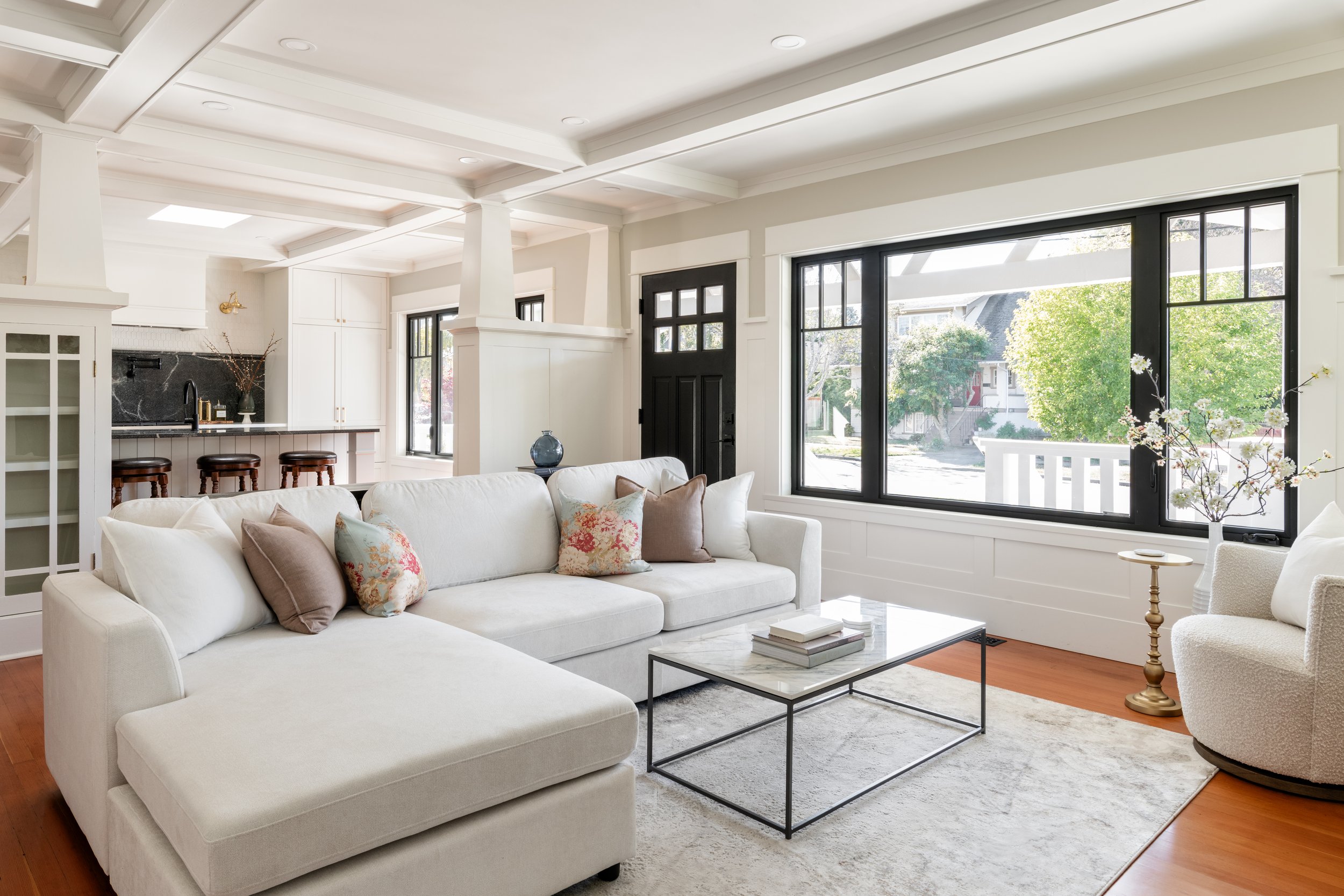
Light filled interiors are often associated with calm, openness, and clarity. Yet many homeowners discover that spaces designed to feel light can also feel cold, flat, or emotionally distant. This is especially common in homes that rely heavily on white surfaces, minimal furnishings, or uniform lighting.
Designing a home that feels light and bright while remaining warm and welcoming requires balance. This article explores how to achieve visual lightness without sacrificing comfort, depth, or emotional connection.
Understanding the difference between light and brightness
Lightness in interior design is not the same as brightness. Brightness refers to the amount of light in a space, while lightness refers to how a space feels visually and emotionally.
A room can be bright but feel harsh. Conversely, a space can feel light and open without being overly bright.
Designing for lightness focuses on reflection, flow, and balance rather than intensity alone.
Why light spaces often feel cold
Light interiors can feel cold when they rely on uniform colour, high contrast, or hard materials.
Large expanses of white, glossy finishes, and minimal texture can flatten a space and remove visual warmth. In colder climates or homes with limited natural light, this effect is amplified.
Without variation and softness, light spaces can feel more clinical than calming.
Using warm undertones to soften light palettes
Colour undertones play a critical role in how light spaces feel. Cool whites and greys reflect light sharply, while warm undertones soften it.
Choosing whites with subtle warmth, or layering neutrals such as sand, stone, and taupe, creates a gentler effect.
This approach maintains brightness while adding emotional warmth.
Introducing texture to add depth
Texture is essential in light interiors. It introduces shadow, movement, and tactile interest without darkening the space.
Materials such as linen, wool, wood, plaster, and natural stone add warmth through surface variation.
Even subtle texture can prevent a light space from feeling flat or sterile.
Balancing contrast carefully
Contrast adds clarity, but too much contrast can make a space feel sharp.
In light interiors, contrast is most effective when it is tonal rather than graphic. Soft transitions between light and mid tones maintain cohesion.
Dark accents can be used sparingly to anchor the space without overwhelming it.
Letting natural materials carry the warmth
Natural materials bring inherent warmth to light spaces. Wood tones, even in small amounts, significantly shift the emotional tone.
Stone and clay materials add weight and grounding, while still reflecting light softly.
These materials connect the space to nature, reinforcing comfort and longevity.
Rethinking the role of white
White is often treated as the default solution for light interiors. While it remains useful, it works best as part of a palette rather than the entire palette.
White can frame other materials, highlight form, or provide visual rest without dominating the space.
Used thoughtfully, white supports lightness without creating coldness.
Layering lighting to enhance warmth
Lighting strongly influences how light spaces feel. Uniform overhead lighting can emphasise coldness, even in warm palettes.
Layered lighting creates depth and softness. Ambient lighting establishes a gentle baseline, while accent and task lighting add warmth and focus.
Warm light temperatures are especially important in light interiors.
Designing for how light changes throughout the day
Natural light changes dramatically from morning to evening. Interiors designed only for daylight can feel stark at night.
Considering how the space will be lit after dark is essential. Warm, low level lighting helps maintain comfort when daylight fades.
Designing for the full daily cycle prevents light spaces from feeling cold in the evening.
Furniture that supports visual softness
Furniture selection affects how light a space feels. Hard edged, low contrast furniture can reinforce coldness.
Softer silhouettes, upholstered pieces, and furniture with visible texture add warmth without heaviness.
Light spaces benefit from furniture that feels inviting rather than sculptural.
Using layout to enhance openness
Lightness is also influenced by flow. Clear circulation and thoughtful spacing allow light to move through the space.
Avoiding over crowding and allowing space between elements supports openness without emptiness.
Layout clarity reinforces visual calm.
Adding depth through layering rather than colour
When homeowners want warmth, they often reach for darker colours. In light interiors, layering is often more effective.
Layering materials, finishes, and lighting creates depth without darkening the space.
This approach maintains lightness while increasing richness.
Avoiding common mistakes in light interior design
One common mistake is removing too much in pursuit of lightness. Over editing can strip warmth and character.
Another is relying solely on colour to create lightness, ignoring texture, lighting, and layout.
Balanced design considers all elements together.
Why light and warm interiors age better
Homes that balance lightness with warmth tend to feel comfortable across seasons and life stages.
They are less tied to specific trends and more adaptable over time.
This balance supports longevity and long term satisfaction.
Conclusion
Designing a home that feels light without feeling cold requires thoughtful balance. By using warm undertones, natural materials, texture, and layered lighting, interiors can remain bright while feeling welcoming and grounded.
Lightness does not have to come at the expense of comfort. When approached with intention, light interiors can support both clarity and warmth, creating spaces that feel calm, livable, and enduring.
Read More…
“I believe that if you are true to expressing yourself, coupled with the right amount of discipline and routine, your space can reflect your personality, and you can turn your home into your haven.”

The Complete Client Experience Template System
Discover a comprehensive, fully customisable suite of templates designed to guide you through every phase of your interior design projects.
From onboarding to approvals, proposals to presentations, this system supports a smoother, more polished process at every step.
Whether you're just starting out or refining your workflow, these templates help you lead with clarity, save time, and elevate your client experience from day one.