Curved Furniture and Soft Forms: The Shift Toward Gentler Interior Design
Disclosure: This post may contain recommended products from various brands and retailers. Some links may be affiliate links, meaning I may earn a small commission at no extra cost to you if you make a purchase. I only share pieces I truly love and believe will bring warmth and beauty into your home. These commissions help fund this blog, allowing me to continue sharing expert interior design recommendations, insights, and inspiration. Thank you for your support!
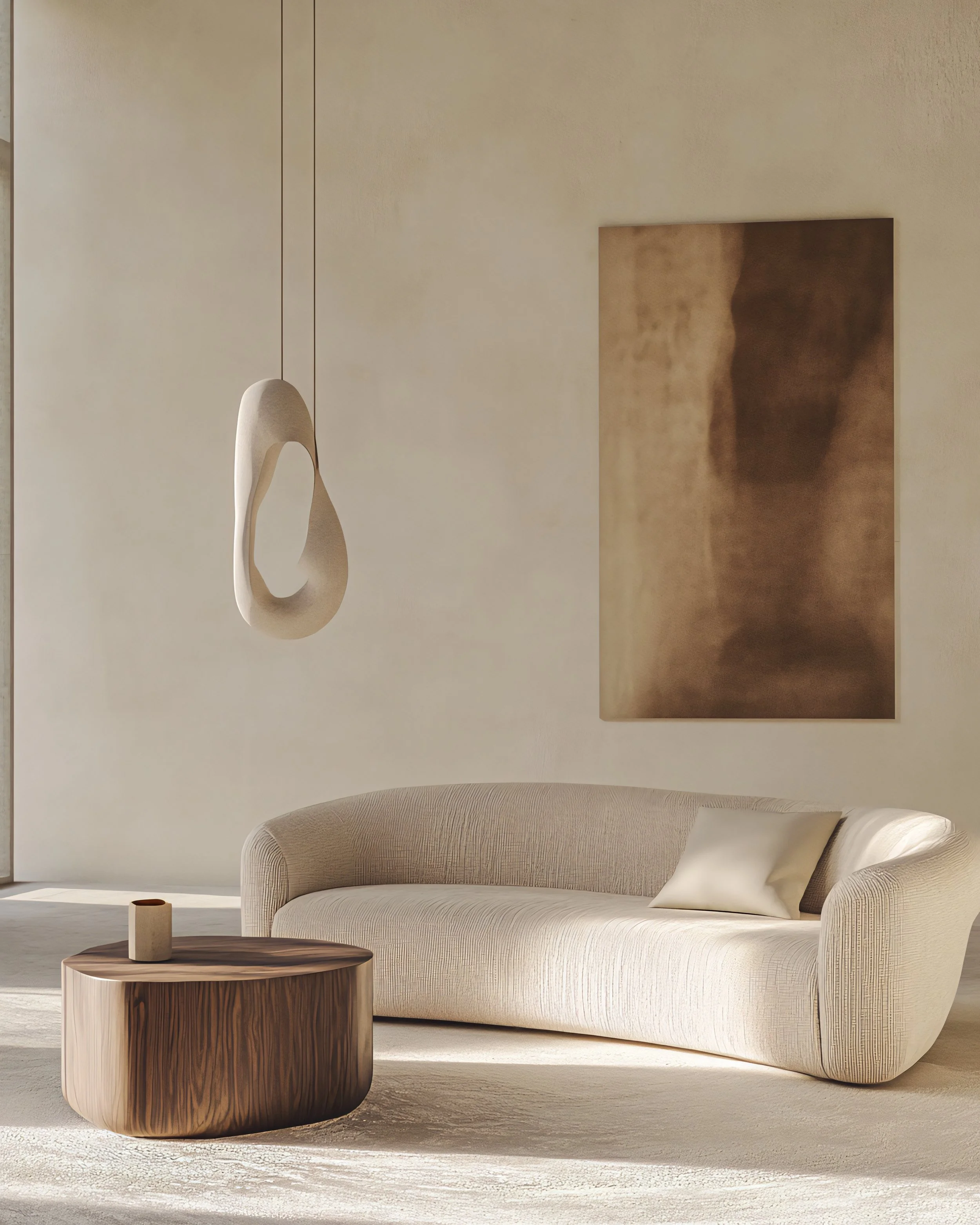
Curved furniture and soft forms have emerged as one of the most influential interior design movements shaping contemporary homes. Moving away from rigid lines and sharp geometry, this shift reflects a broader desire for comfort, emotional ease, and human centred spaces.
Rather than a decorative trend, the return to curves speaks to how people want their homes to feel. Softer silhouettes create environments that are welcoming, adaptable, and visually calming. This article explores why curved forms are gaining momentum, how they influence spatial experience, and how to apply them thoughtfully in residential interiors.
Understanding the return to curved forms
Curves have cycled in and out of interior design for decades, but their current resurgence is rooted in psychology as much as aesthetics. Rounded shapes are often perceived as safer and more approachable than sharp angles, creating a sense of ease within a space.
Historically, modernist interiors favoured straight lines for efficiency and clarity. While effective, this rigidity can feel impersonal when overused. The renewed interest in curves reflects a shift toward interiors that prioritise emotional comfort alongside function.
Curved forms also respond well to open plan living, helping to soften transitions and guide movement without hard boundaries.
Why curved furniture is trending now
Several cultural and lifestyle factors have contributed to the popularity of curved furniture. As homes have taken on more roles, from workplace to sanctuary, the demand for spaces that feel nurturing has increased.
Curves introduce visual softness that counterbalances technology heavy environments and rectilinear architecture. They help create a sense of flow and intimacy within larger or more minimal spaces.
There is also a growing interest in retro inspired design. Influences from mid century modern and 1970s interiors have re entered contemporary design, reinterpreted through modern materials and proportions.
How soft forms influence spatial experience
The shape of furniture and architectural elements significantly affects how a space is perceived and used. Curved forms encourage movement and interaction by eliminating sharp visual stops.
In seating areas, rounded sofas and chairs create a more conversational layout, inviting people to gather. In circulation spaces, arched openings or curved walls guide the eye gently, making transitions feel more fluid.
Soft forms can also make compact spaces feel larger by reducing visual fragmentation. Continuous curves allow the eye to travel smoothly, enhancing the sense of openness.
Integrating curved furniture intentionally
Successful use of curved furniture relies on balance and restraint. Introducing too many rounded elements can feel overwhelming or unfocused.
Curves work best when paired with simpler, more linear elements. A curved sofa against a straight wall, or a rounded dining table within a rectilinear room, creates contrast that feels intentional.
Scale is also important. Oversized curves can dominate a space, while subtle rounding in edges and profiles adds softness without sacrificing clarity.
Curved furniture should be positioned to support natural movement and function rather than purely aesthetic goals.
Applying curves beyond furniture
The shift toward soft forms extends beyond furniture into architectural and decorative elements. Arched doorways, curved millwork, and rounded islands introduce continuity and flow.
Lighting fixtures with organic shapes reinforce this language without adding bulk. Even small details, such as rounded hardware or softly profiled cabinetry, contribute to the overall effect.
Textiles and rugs can echo curved motifs, reinforcing cohesion across the space.
These applications allow curves to feel integrated rather than isolated.
Using materials to enhance softness
Material choice plays a significant role in how curved forms are perceived. Soft, tactile materials emphasise the comfort associated with rounded shapes.
Upholstery in bouclé, wool, or velvet enhances the inviting quality of curved seating. Natural materials such as wood and stone can also be shaped with gentle edges to soften their presence.
Matte finishes tend to complement curves more effectively than high gloss, which can emphasise geometry and reflectivity.
Texture adds depth, ensuring the space feels layered rather than overly smooth.
Colour and curves in modern interiors
Colour can amplify or moderate the impact of curved forms. Soft, tonal palettes enhance the calming effect, allowing shapes to read as fluid rather than dominant.
Neutral hues such as warm whites, taupes, and muted earth tones support a cohesive look. When colour is introduced, it is often used tonally or in low contrast combinations.
Darker colours can make curved forms feel sculptural, but they should be balanced with lighter elements to maintain openness.
Lighting also influences how curves are perceived, with soft, diffused light enhancing their dimensionality.
Curves as a response to wellness driven design
The rise of curved furniture aligns closely with the wellness focused direction of contemporary interior design. Spaces designed with comfort and emotional response in mind often incorporate softer geometry.
Curves reduce visual tension and create environments that feel more forgiving and adaptable. This is particularly valuable in homes that serve multiple functions and experience frequent transitions throughout the day.
By supporting relaxation and social connection, curved forms contribute to interiors that feel emotionally supportive rather than purely functional.
Avoiding common pitfalls with curved design
One potential challenge is sacrificing function for form. Curved furniture must still support comfort, circulation, and usability.
Another risk is inconsistency. Introducing a single curved element without supporting details can make it feel out of place. Successful interiors often repeat the curve subtly through multiple elements.
Proportion and spacing are critical. Adequate clearance ensures that soft forms enhance movement rather than obstruct it.
The future of soft forms in interior design
Curved furniture and gentle geometry are likely to remain influential as design continues to prioritise human experience. Future applications may explore modular curved systems, sustainable materials, and more adaptive layouts.
Rather than replacing straight lines entirely, curves will continue to complement them, creating balanced environments that feel both structured and welcoming.
This evolution reflects a broader understanding of design as a tool for wellbeing, not just visual expression.
Conclusion
The shift toward curved furniture and soft forms represents a meaningful change in how interiors are designed and experienced. By softening geometry, these elements introduce comfort, flow, and emotional ease into the home.
When applied with intention and balance, curves create spaces that feel contemporary yet timeless, supporting both function and wellbeing. As design continues to evolve, softer forms will remain a powerful way to humanise modern interiors.
Read More…
“I believe that if you are true to expressing yourself, coupled with the right amount of discipline and routine, your space can reflect your personality, and you can turn your home into your haven.”

The Complete Client Experience Template System
Discover a comprehensive, fully customisable suite of templates designed to guide you through every phase of your interior design projects.
From onboarding to approvals, proposals to presentations, this system supports a smoother, more polished process at every step.
Whether you're just starting out or refining your workflow, these templates help you lead with clarity, save time, and elevate your client experience from day one.