How to Choose the Right Stone for Your Bathroom Countertops
Disclosure: This post may contain recommended products from various brands and retailers. Some links may be affiliate links, meaning I may earn a small commission at no extra cost to you if you make a purchase. I only share pieces I truly love and believe will bring warmth and beauty into your home. These commissions help fund this blog, allowing me to continue sharing expert interior design recommendations, insights, and inspiration. Thank you for your support!
When designing or renovating a bathroom, one of the most important decisions you’ll make is selecting the right countertop material. The countertop not only needs to look stylish but also withstand the unique demands of the bathroom environment, such as moisture, humidity, and frequent cleaning.
Natural stones like granite and marble, as well as engineered options like quartz, all have their advantages, but choosing the best one for your bathroom depends on a variety of factors. In this guide, we’ll explore the key considerations when selecting a bathroom countertop stone and walk you through the best options to suit different styles and needs.
Key Factors to Consider When Choosing a Bathroom Countertop
Before diving into the specific types of stone, it’s essential to keep a few key factors in mind when making your decision. Understanding how each material will perform in a bathroom setting will ensure you make the right choice.
1. Moisture Resistance
Bathrooms are high-moisture environments, so the material you choose must be able to resist water damage. If your countertop is constantly exposed to water—whether from splashes around the sink, shower steam, or spills—it must be resistant to absorbing moisture, which could lead to staining, cracking, or mildew growth.
2. Durability
The countertop in your bathroom will experience daily wear, from water splashes to makeup stains, shaving, and other typical activities. The material you choose should be able to handle this routine usage without showing signs of wear and tear too quickly.
3. Ease of Cleaning and Maintenance
Bathroom countertops must be easy to clean, especially since they’re exposed to soap, toothpaste, cleaning products, and other substances. Some stones require more maintenance than others to keep their beauty intact.
4. Aesthetics
Of course, the material must align with the design and aesthetic of your bathroom. Whether you're going for a modern, minimalist look, a classic and elegant design, or a rustic feel, different countertop materials offer varying styles, colors, and finishes to suit your vision.
Best Stone Materials for Bathroom Countertops
Now that you know what factors to consider, let’s dive into the best stone options for bathroom countertops. We’ll compare natural stones like granite, marble, and soapstone, along with engineered materials like quartz.
1. Quartz: Durable, Low-Maintenance, and Versatile
Why it’s a great choice:
Quartz is one of the most popular countertop materials for bathrooms due to its low-maintenance nature and exceptional durability. Unlike natural stone, quartz is an engineered material made from natural quartz crystals mixed with resins and pigments, resulting in a non-porous surface that’s resistant to stains, moisture, and bacteria.
Aesthetic appeal:
Quartz comes in a variety of colors and patterns, from solid neutrals to designs that mimic the look of marble or granite. This makes it a highly customizable option for bathrooms of all styles. Whether you want a sleek, modern look or a traditional marble aesthetic, quartz can provide the versatility you need.
Pros:
Non-porous, so no sealing required.
Resistant to stains, scratches, and moisture.
Available in a wide range of colors and patterns.
Easy to clean and maintain.
Cons:
Not as heat-resistant as granite (though this is less of an issue in bathrooms).
Can be more expensive than some natural stones.
Ideal for:
Bathrooms where low maintenance, durability, and versatility are priorities. Quartz works well in both modern and traditional bathroom designs.
2. Granite: Durable and Timeless
Why it’s a great choice:
Granite is one of the most durable natural stones available and offers both beauty and strength. It is highly resistant to heat, scratches, and stains, making it perfect for high-use areas like bathroom countertops. With proper sealing, granite can handle the moisture and humidity that come with bathroom environments.
Aesthetic appeal:
Granite’s natural patterns and colors give each countertop a unique look. Whether you choose a neutral tone like beige or gray or a bold, dark color like black or blue, granite countertops add a luxurious touch to any bathroom. The stone’s distinctive veining and speckles can add character and depth to the space.
Pros:
Extremely durable and heat-resistant.
Available in a wide range of colors and patterns.
Adds value to your home.
Resistant to scratches and stains when sealed properly.
Cons:
Requires sealing to maintain its resistance to stains and moisture.
Can be heavy and may require additional support for installation.
Ideal for:
Homeowners who want a natural stone with timeless beauty and durability. Granite is a great option for traditional or elegant bathrooms that demand both performance and aesthetic appeal.
3. Marble: Elegant and Luxurious
Why it’s a great choice:
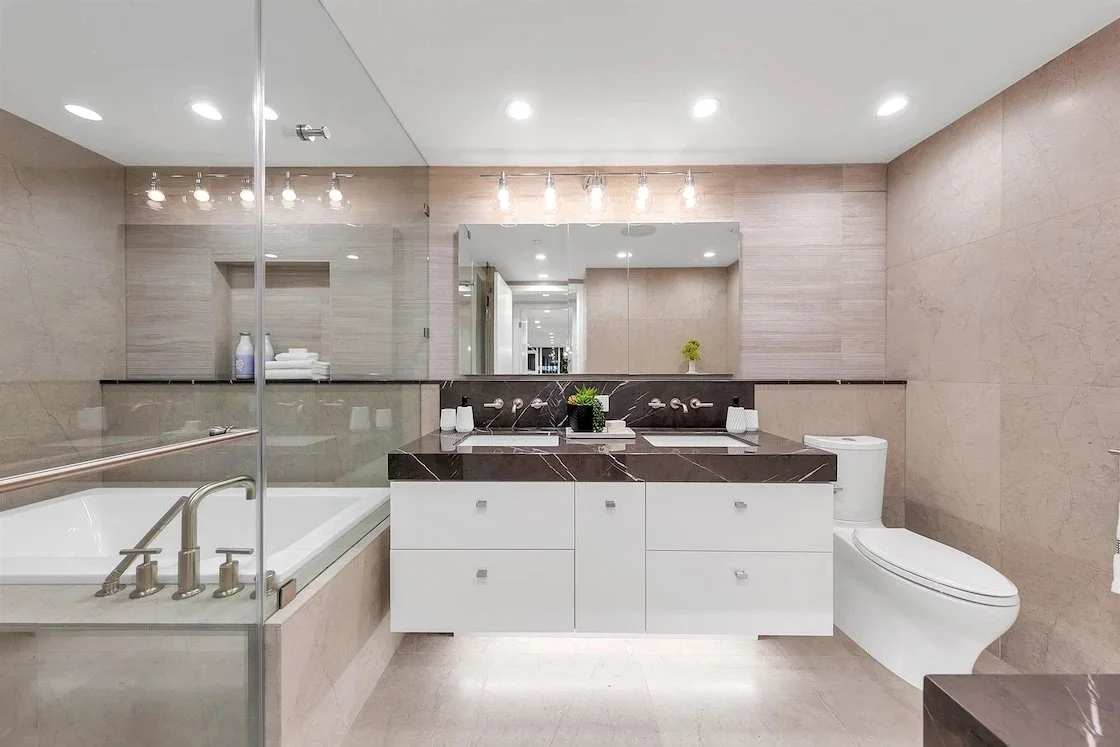
Marble has been a symbol of luxury and elegance for centuries. It adds a sophisticated, timeless look to bathrooms and is highly sought after for vanity countertops. However, marble is more porous than granite or quartz, which means it requires more care and maintenance, especially in high-moisture areas.
Aesthetic appeal:
Marble’s signature veining creates a luxurious, high-end look that makes a dramatic statement in any bathroom. Available in various shades, from classic white to deep gray or black, marble is often chosen for its visual appeal rather than its durability.
Pros:
Offers a luxurious, classic aesthetic.
Adds significant value to a home.
No two marble slabs are the same, ensuring a unique countertop.
Cons:
Requires regular sealing to prevent stains and moisture absorption.
More susceptible to scratching and staining from acids (e.g., cleaning products, lemon juice).
Higher maintenance than granite and quartz.
Ideal for:
Homeowners looking for a luxury material that adds classic beauty to their bathroom, especially in powder rooms or master bathrooms where aesthetics take precedence over high durability.
4. Soapstone: Soft and Heat-Resistant
Why it’s a great choice:
Soapstone is a softer, non-porous natural stone that’s gaining popularity for both kitchen and bathroom countertops. It’s known for its heat resistance, smooth texture, and rustic appearance. Over time, soapstone develops a natural patinathat adds to its character.
Aesthetic appeal:
Soapstone countertops have a more matte, smooth finish than other stones, offering a softer, organic look. It typically comes in shades of gray, green, or black, which add a rustic charm to any bathroom design.
Pros:
Heat-resistant, making it ideal for areas exposed to hot water or steam.
Non-porous and resistant to bacteria and stains.
Develops a natural patina with age, adding unique character.
Cons:
Softer than granite, so it can be more prone to scratching.
Requires periodic oiling to maintain its appearance.
Can be more expensive than other options.
Ideal for:
Homeowners looking for a unique, rustic bathroom countertop with natural beauty and heat resistance. Soapstone is a great choice for vintage-inspired, farmhouse-style, or organic-themed bathrooms.
5. Limestone: Soft and Subtle
Why it’s a great choice:
Limestone is a softer stone that provides a warm, natural aesthetic to any bathroom. While it’s more porous than granite or quartz, it can be a suitable choice for low-traffic bathrooms if sealed properly. It’s an excellent material for creating a serene, understated look.
Aesthetic appeal:
Limestone’s natural, earthy colors and smooth textures give it a calming, organic feel. It comes in shades of beige, tan, and soft gray, making it an ideal choice for creating a relaxing, spa-like atmosphere in your bathroom.
Pros:
Soft, natural look that suits a wide range of styles.
More affordable than granite and marble.
Ideal for creating a relaxed, calming atmosphere.
Cons:
Requires sealing and regular maintenance to avoid staining.
Softer than other stones, making it more prone to damage.
Not as durable as granite or quartz.
Ideal for:
Homeowners who want an organic, natural look and are willing to provide the necessary maintenance to keep the stone in top condition.
Conclusion: Finding the Perfect Stone for Your Bathroom Countertop
When choosing a stone for your bathroom countertop, it’s essential to consider factors such as moisture resistance, durability, maintenance needs, and aesthetic preferences. Each type of stone offers distinct benefits, and the best choice for your space depends on your priorities.
If you prefer low-maintenance and durability, quartz is an excellent choice. For those who love the beauty of natural stones, granite and marble offer timeless elegance, though they require more care. If you’re after a rustic or unique look, soapstone or limestone may be your perfect match.
By understanding the characteristics of each material, you’ll be able to choose the ideal stone that complements your bathroom’s design while standing up to daily wear and moisture exposure.
Read More…
“I believe that if you are true to expressing yourself, coupled with the right amount of discipline and routine, your space can reflect your personality, and you can turn your home into your haven.”

The Complete Client Experience Template System
Discover a comprehensive, fully customisable suite of templates designed to guide you through every phase of your interior design projects.
From onboarding to approvals, proposals to presentations, this system supports a smoother, more polished process at every step.
Whether you're just starting out or refining your workflow, these templates help you lead with clarity, save time, and elevate your client experience from day one.