Minimalist Bathrooms That Still Feel Warm: Rethinking Modern Bathroom Design
Disclosure: This post may contain recommended products from various brands and retailers. Some links may be affiliate links, meaning I may earn a small commission at no extra cost to you if you make a purchase. I only share pieces I truly love and believe will bring warmth and beauty into your home. These commissions help fund this blog, allowing me to continue sharing expert interior design recommendations, insights, and inspiration. Thank you for your support!
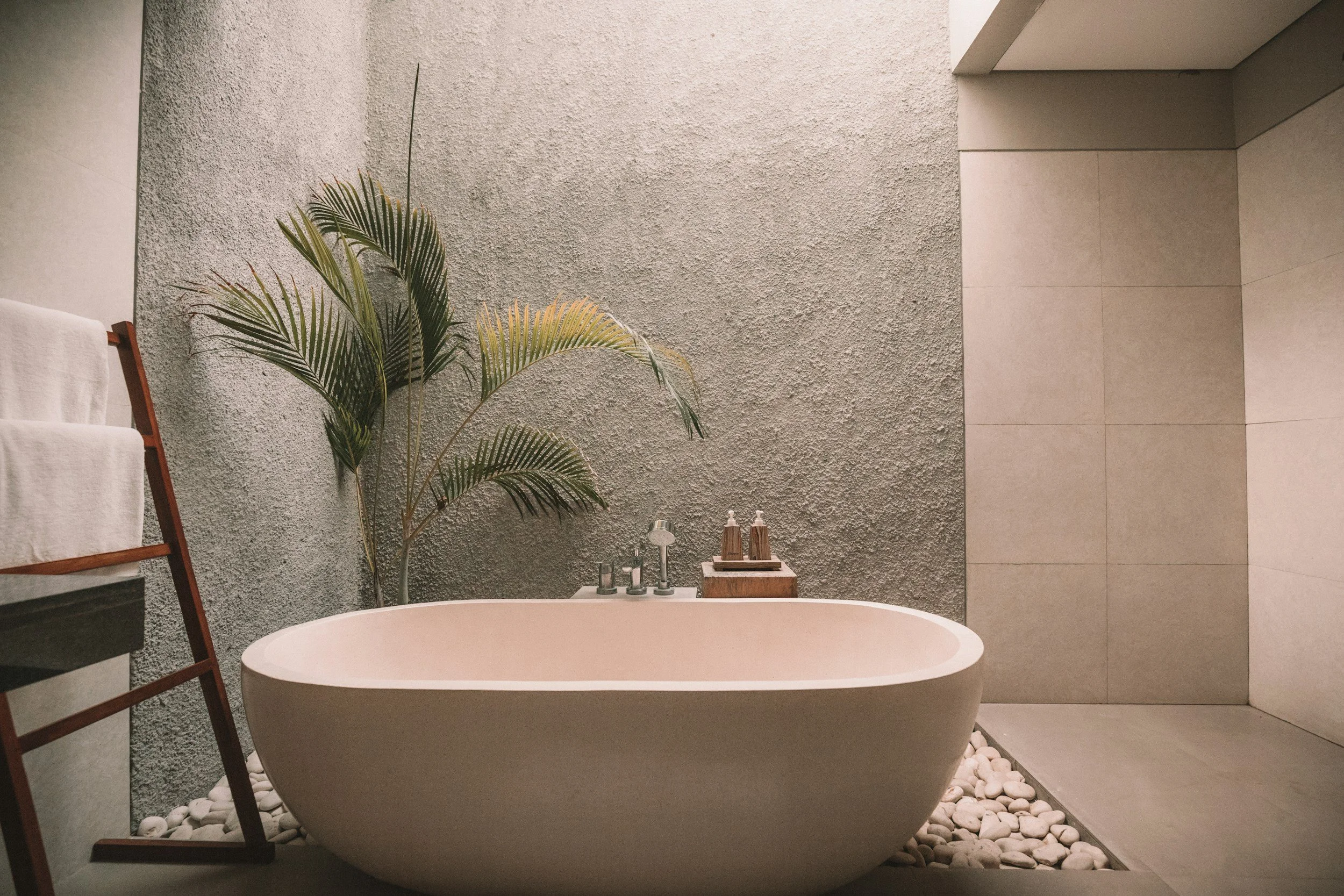
Minimalist bathrooms have long been associated with clean lines, sparse detailing, and a sense of visual order. While this approach remains popular, many homeowners now find that overly minimal bathrooms can feel cold, impersonal, or disconnected from daily comfort. In response, modern bathroom design is evolving toward a warmer, more human interpretation of minimalism.
This shift is not about abandoning simplicity, but about refining it. Warm minimalist bathrooms balance restraint with material richness, sensory comfort, and longevity. This article explores how minimalist bathrooms can remain modern while feeling inviting, practical, and enduring.
Understanding why minimalist bathrooms can feel cold
Traditional minimalist bathroom design often relies on stark colour palettes, glossy surfaces, and sharp contrasts. While visually striking, these elements can create spaces that feel sterile rather than restorative.
Bathrooms are highly sensory environments. Temperature, texture, acoustics, and light all influence how the space is experienced. When minimalism focuses only on visual clarity, these other factors are often overlooked.
As bathrooms increasingly serve as places for decompression rather than purely functional use, this imbalance has become more apparent.
The shift toward warmth in modern bathroom design
The move toward warmer minimalist bathrooms reflects broader design priorities around wellbeing and longevity. Homeowners are seeking spaces that feel calming and supportive rather than clinical.
Warmth in this context does not mean excess decoration. It refers to thoughtful material choices, softer transitions, and attention to how the space feels throughout the day.
This approach allows bathrooms to remain visually simple while becoming more comfortable and emotionally resonant.
Using natural materials to soften minimalism
Material selection is one of the most effective ways to introduce warmth into a minimalist bathroom. Natural materials inherently offer variation and texture that counterbalance clean lines.
Stone, wood, clay, and textured tile add depth without clutter. Even when used sparingly, these materials shift the tone of the space from stark to grounded.
Wood is often incorporated through vanities, shelving, or accents, while stone surfaces provide visual weight and a sense of permanence.
Choosing a warmer neutral palette
Colour plays a subtle but important role in warming minimalist bathrooms. Cool whites and greys can feel crisp, but they often lack comfort in low light or colder climates.
Warmer neutrals such as soft whites, sand, taupe, and light earth tones create a more inviting foundation. These colours still read as minimal, but they soften the overall atmosphere.
Tonal layering within a narrow palette adds depth without disrupting simplicity.
Texture as a substitute for decoration
In warm minimalist bathrooms, texture replaces ornament. Interest is created through surface variation rather than pattern or contrast.
Honed stone, plaster finishes, fluted cabinetry, and tactile tiles introduce quiet complexity. These elements respond to light and touch, making the space feel more engaging.
This textural approach aligns with longevity, as it avoids decorative features that may date quickly.
Lighting as a key contributor to warmth
Lighting has a significant impact on how minimalist bathrooms feel. Bright, uniform lighting can emphasise sterility, while layered lighting supports comfort.
Ambient lighting provides overall illumination, while task lighting supports function at mirrors and vanities. Accent lighting can highlight textures or architectural features.
Warm light temperatures are generally more flattering and calming, reinforcing the sense of a spa like environment.
Rethinking fixtures and hardware
Fixtures and hardware in minimalist bathrooms are often chosen for simplicity, but finish selection influences warmth.
Matte metals, brushed finishes, and softer tones feel more approachable than high gloss chrome. These finishes integrate more naturally with textured materials and warmer palettes.
Simple forms remain important, but subtle detailing can add refinement without visual noise.
Balancing minimalism with comfort
A common misconception is that minimal bathrooms must feel bare. In reality, comfort is essential to successful minimalism.
Heated floors, soft textiles, and acoustically considerate materials enhance daily use without adding clutter. Even small details, such as a well placed bench or niche, can improve functionality and comfort.
These elements support the idea of the bathroom as a space for restoration rather than efficiency alone.
Storage and visual calm
Minimalist bathrooms rely on effective storage to maintain visual clarity. When storage is insufficient, even the most restrained design can feel chaotic.
Integrated storage solutions, recessed niches, and streamlined cabinetry allow essentials to be concealed while remaining accessible.
This approach supports both aesthetics and daily ease, reinforcing the calm that minimalism aims to achieve.
Warm minimalism across different home styles
Warm minimalist bathrooms work across a range of architectural contexts. In modern homes, they soften sharp geometry. In traditional homes, they offer clarity without feeling out of place.
This adaptability makes them a strong choice for long term renovations, particularly when homeowners want modernisation without losing character.
Avoiding common mistakes in minimalist bathroom design
One common mistake is prioritising appearance over comfort. A bathroom that looks refined but feels uncomfortable will not age well.
Another is over simplifying material selection. Too few materials or overly smooth surfaces can make the space feel flat.
Successful warm minimalism balances restraint with richness and function.
The future of minimalist bathrooms
As design continues to move toward wellness focused living, minimalist bathrooms are likely to become more nuanced rather than more extreme.
Future designs will emphasise sensory comfort, sustainable materials, and adaptability while retaining visual clarity.
Warm minimalism offers a framework that supports both contemporary aesthetics and long term use.
Conclusion
Minimalist bathrooms do not need to feel cold or impersonal. By incorporating warmth through materials, colour, texture, and lighting, modern bathrooms can remain simple while becoming more inviting.
This evolved approach to minimalism supports comfort, longevity, and daily wellbeing. For homeowners seeking bathrooms that feel calm rather than clinical, warm minimalist design offers a thoughtful and enduring solution.
Read More…
“I believe that if you are true to expressing yourself, coupled with the right amount of discipline and routine, your space can reflect your personality, and you can turn your home into your haven.”

The Complete Client Experience Template System
Discover a comprehensive, fully customisable suite of templates designed to guide you through every phase of your interior design projects.
From onboarding to approvals, proposals to presentations, this system supports a smoother, more polished process at every step.
Whether you're just starting out or refining your workflow, these templates help you lead with clarity, save time, and elevate your client experience from day one.