The Art of Editing: Why Great Design Is About What You Leave Out
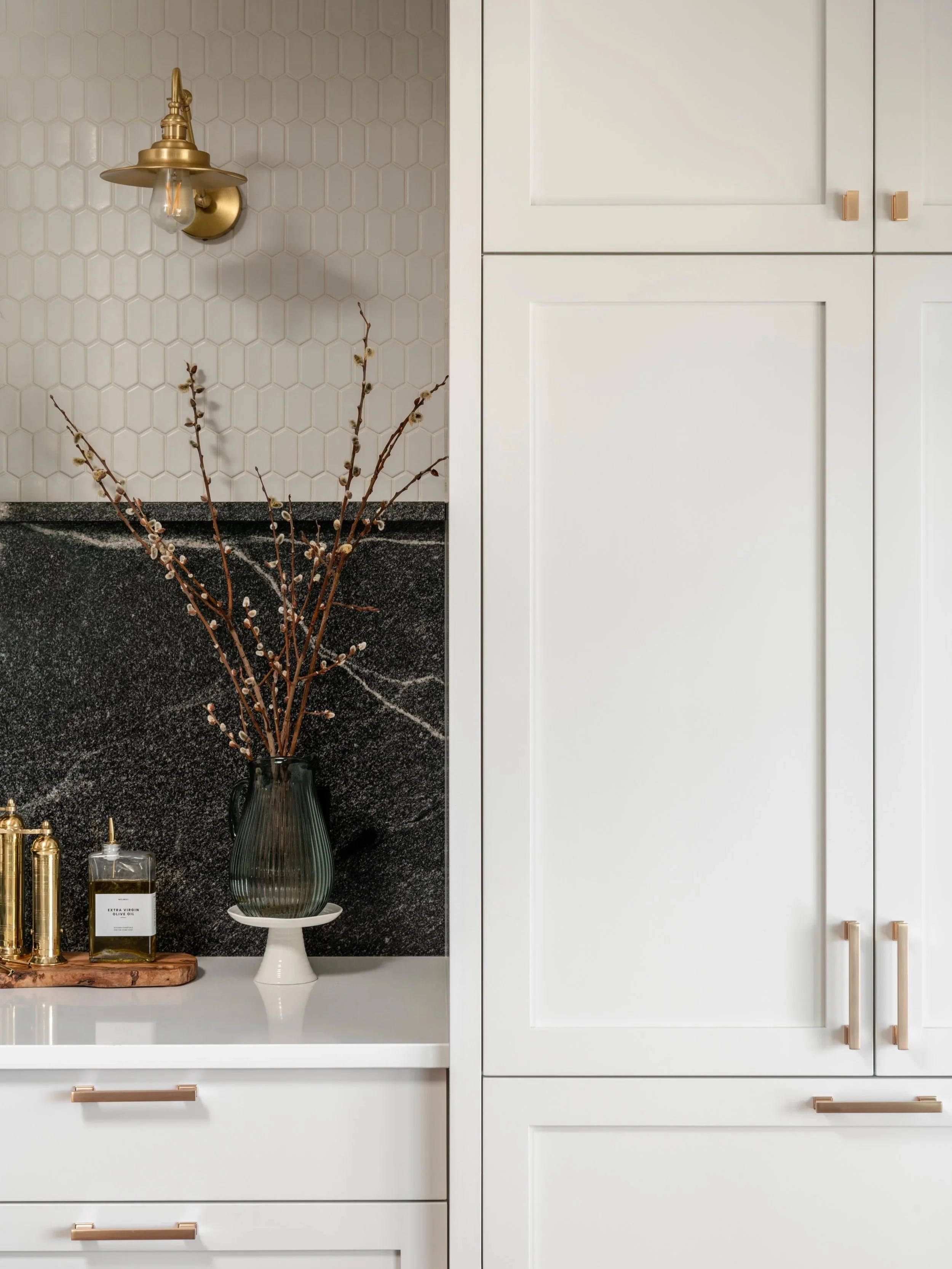
The most beautiful homes aren't created by filling every corner. They're created by knowing what deserves to stay - and having the confidence to let the rest go.
Walk into almost any room that doesn't feel quite right, and you'll often hear the same conclusion.
"It needs something."
Maybe another chair.
A larger rug.
More cushions.
Something for that empty corner.
A few decorative objects for the shelves.
Our instinct is almost always to add.
Designers often do the opposite.
One of the most important lessons I've learned throughout my career is that great design isn't about filling a room - it's about editing one.
Every piece of furniture, every light fixture, every accessory and every material asks for your attention. The more you add, the more those elements begin competing with one another. Eventually, even beautiful things lose their impact because nothing has been given room to stand out.
The homes that stay with us aren't usually the ones with the most expensive furniture or the most carefully styled shelves. They're the ones that feel calm, balanced and intentional. The ones where every piece seems to belong.
That isn't an accident.
It's editing.
And it's one of the most powerful skills any homeowner can learn.
Good Design Isn't About Filling a Room
One of the biggest misconceptions about decorating is that an unfinished room simply needs more.
More furniture.
More colour.
More accessories.
More personality.
In reality, many rooms don't feel unfinished because they're missing something. They feel unfinished because too many things are competing for attention.
Every object you bring into a room has a visual presence. Some are naturally louder than others - a dark cabinet, a patterned rug, a large piece of artwork - but even the smallest decorative object asks your eye to notice it.
The more visual information we introduce, the harder the room has to work.
That's why beautifully designed homes often feel surprisingly calm. It's not because they're empty. It's because every piece has been chosen carefully, and every piece has been given room to breathe.
Editing isn't about taking things away for the sake of simplicity.
It's about allowing the right things to stand out.
When everything is important, nothing is.
The goal isn't to own less.
The goal is to notice more.
Once you begin looking at a room this way, you stop asking, "What else could I buy?"
Instead, you start asking a far more valuable question.
"What already deserves more attention?"
That single shift changes everything.
Every Object Tells a Story
If editing were only about design, it would be easy.
The hardest part isn't knowing what looks good.
It's deciding what stays and what goes.
Our homes naturally collect pieces over time. Some were expensive. Some were gifts. Some remind us of a trip, a person or a chapter of our lives. Others were simply bought because they filled an empty space.
None of those reasons are wrong.
But they aren't all equally important.
One of the questions I ask myself when I'm designing a room is surprisingly simple.
If this piece disappeared tomorrow, would the room be stronger or weaker?
It's a question that changes your thinking almost immediately.
Sometimes the answer is obvious.
Other times you realise the room has been carrying objects that no longer serve it - pieces that quietly add visual noise without adding meaning.
That doesn't mean they have no value.
It simply means they may no longer belong in this room, or perhaps they no longer need to be displayed at all.
Editing isn't about stripping your home of personality.
It's about making room for the personality that matters most.
The objects you choose to keep become more significant when they aren't competing with everything else around them.
A collection becomes more interesting when every piece has space to be appreciated.
A beautiful antique suddenly commands attention when it's no longer surrounded by distractions.
A favourite piece of artwork becomes the focal point it was always meant to be.
Sometimes removing one unnecessary piece says more than adding five beautiful ones.
Give Beautiful Things Room to Breathe
One of the easiest ways to improve a room isn't to buy something new.
It's to allow what you already own to shine.
Think about a bookshelf.
Many of us instinctively fill every shelf from end to end with books, framed photographs, candles, baskets and decorative objects. Individually, each piece may be beautiful. Together, they often compete for attention.
Now imagine removing half of those objects.
Not because they're unattractive.
Because the remaining pieces suddenly have room to breathe.
The books become more noticeable.
The sculpture becomes more intentional.
The photograph tells a stronger story.
The shelf doesn't feel empty.
It feels edited.
The same is true throughout the home.
A dining table rarely needs six decorative objects to feel complete.
A single arrangement of seasonal branches can have more presence than an elaborate collection of accessories.
A console table becomes more elegant when there's one statement lamp instead of several smaller decorative pieces.
Even artwork benefits from restraint.
When every wall is filled, nothing feels special.
When one beautiful piece is given room to stand on its own, your eye naturally knows where to rest.
This isn't about following rules.
It's about understanding visual balance.
Every room needs moments of quiet.
Just as music relies on pauses between the notes, a home relies on moments where the eye can rest before moving on.
Without those pauses, even the most beautiful interiors begin to feel busy.
Editing creates those moments.
It gives the room rhythm.
It creates hierarchy.
It allows character to emerge naturally instead of fighting to be noticed.
Beautiful homes aren't memorable because they contain more.
They're memorable because they reveal more.
Editing Doesn't Mean Minimalism
This is the point where many people misunderstand what I'm trying to say.
Editing is not the same as minimalism.
Minimalism asks a very different question.
"How little can I live with?"
Editing asks,
"What deserves to stay?"
Those aren't the same thing.
I've walked into homes filled with beautiful collections, antique furniture, books stacked on every shelf and walls covered in artwork that still felt calm and effortless.
I've also walked into nearly empty rooms that somehow felt unfinished or uncomfortable.
The difference wasn't the amount of furniture.
It was the intention behind it.
Every object should have a reason for being there.
Sometimes that reason is practical.
Sometimes it's beautiful.
Sometimes it's deeply personal.
The goal isn't to remove personality from a home.
It's to remove distraction from personality.
Your favourite chair should be noticed.
That vintage lamp you searched months to find should be appreciated.
Your grandmother's bowl shouldn't disappear because it's surrounded by twenty other decorative objects.
A home with character isn't one that's full.
It's one that's thoughtful.
The irony is that editing often makes a room feel richer, not simpler.
When every object has been chosen with care, quality begins to replace quantity.
The room feels more generous because each piece has space to contribute.
Nothing is trying too hard.
Nothing is shouting for attention.
The home begins to feel settled.
And that's a feeling that's very difficult to buy.
How Designers See a Room
People often imagine that designers walk into a room immediately thinking about colours or furniture.
In reality, that's rarely where my mind goes first.
Before I think about what could be added, I'm paying attention to something else.
Where does my eye land?
Where does it move next?
Where does it see connections?
Where does it hesitate?
Where does it get stuck?
Good design creates a natural flow.
Your eye moves comfortably around the room without effort. One beautiful element leads naturally to the next. There's a clear focal point. Supporting pieces play their role without competing for attention.
When a room doesn't feel quite right, it's often because that visual journey has been interrupted.
Perhaps three large pieces are all demanding attention at once.
Perhaps a collection has grown beyond what the space can comfortably hold.
Perhaps every surface has become an opportunity to display something beautiful.
None of those objects are necessarily the problem.
It's the conversation between them.
Designers aren't simply selecting furniture.
They're editing relationships.
How one object supports another.
How colour repeats quietly throughout a room.
How texture creates depth without overwhelming the space.
How light falls across a surface.
How empty space allows beautiful things to become even more beautiful.
That's why good design often feels effortless.
Not because it happened easily.
Because someone carefully decided what wasn't needed.
Editing is rarely dramatic.
Most of the time, it's subtle.
A lamp moved twenty centimetres.
One chair removed.
Three accessories replaced with one.
Artwork rehung at the correct height.
A coffee table allowed to breathe.
Small decisions.
Remarkable difference.
Learning to See Your Home Differently
One of the most rewarding moments in my work isn't revealing a finished room.
It's watching someone begin to see their own home differently.
Once you understand editing, you can't really unsee it.
You'll start noticing when shelves feel crowded instead of curated.
You'll recognise when one beautiful object is being hidden by five less important ones.
You'll begin asking whether a purchase actually improves the room - or simply adds to it.
You'll become more patient.
You'll buy more thoughtfully.
You'll move furniture before shopping for more.
You'll appreciate empty space instead of rushing to fill it.
Perhaps most importantly, you'll become more confident in your own decisions.
Because editing isn't about following trends.
It's about developing judgement.
That confidence grows over time.
It grows every time you decide not to buy something simply because there's an empty corner.
It grows every time you remove an object and realise the room immediately feels calmer.
It grows every time you choose quality over quantity.
Eventually, decorating becomes less about collecting beautiful things.
It becomes about creating relationships between them.
That's when your home begins to feel truly personal.
Not because it contains more of you.
Because it reflects you more clearly.
A Five-Minute Editing Exercise
You don't need to buy anything to begin editing your home.
In fact, I'd encourage you not to.
Instead, I'd like you to try something.
Walk into one room in your home.
Stand in the doorway.
Don't tidy.
Don't move anything.
Just look.
Ask yourself a few simple questions.
Where does my eye go first?
Is that where I want it to go?
What is competing for my attention?
Are several objects asking to be noticed at once?
What do I never really see anymore?
Has something beautiful quietly disappeared into the background because too many other things surround it?
Which object has earned its place?
Which one hasn't?
Now choose just one thing.
Not five.
Not an afternoon of decluttering.
One thing.
Remove it.
Set it in another room for a few days.
Live with the space before deciding whether it belongs there.
You might discover that you don't miss it at all.
Or you might realise the room suddenly feels calmer.
More balanced.
More intentional.
Occasionally, you'll decide the object belongs exactly where it was.
That's perfectly fine too.
Editing isn't about removing things.
It's about making deliberate decisions.
The exercise isn't successful because something leaves your home.
It's successful because you've started seeing your home differently.
Common Editing Mistakes
Like any skill, editing becomes easier with practice.
Along the way, there are a few common mistakes worth avoiding.
Confusing editing with decluttering.
Decluttering is about reducing excess.
Editing is about improving relationships between the things you choose to keep.
They often overlap, but they aren't the same practice.
Decorating every surface.
Not every shelf needs styling.
Not every corner needs a chair.
Not every wall needs artwork.
Sometimes the most valuable contribution a space can make is simply allowing your eye to rest.
Buying before rearranging.
One of the most overlooked design tools is moving what you already own.
A lamp might work better in another room.
Artwork may deserve a different wall.
A chair that feels unnecessary in one space may become essential in another.
Before buying something new, explore the possibilities already within your home.
Keeping everything visible.
Our homes don't need to display every meaningful object at once.
Rotating books, artwork and collections throughout the year keeps your home feeling fresh while allowing individual pieces to be appreciated properly.
Editing isn't about owning less.
It's about displaying with intention.
Victorious Principle:
Great design isn't about adding more.
It's about allowing the right things to stand out.
A Designer's Perspective
One of the things I enjoy most about walking through a client's home is that the answers are often already there.
Beautiful furniture.
Meaningful artwork.
Collected objects.
Natural light.
Character.
Very rarely does a home need to become someone else's version of beautiful.
More often, it simply needs clarity.
I've learned that my role as a designer isn't always to introduce something new.
Sometimes it's to reveal what was already there.
To simplify.
To refine.
To help beautiful pieces receive the attention they deserve.
Some of my favourite design moments have come from removing something rather than adding it.
A side table that was quietly crowding a seating area.
An extra chair that interrupted the flow of a room.
Too many accessories competing on a mantel.
A collection that became more meaningful once it was given space to breathe.
Those aren't dramatic transformations.
Most people walking into the room couldn't tell you exactly what changed.
They'd simply say,
"It feels better."
To me, that's good design.
One Last Thought
Beautiful homes aren't created in a single shopping trip.
They aren't built by filling every empty corner.
And they rarely become memorable because they contain more than everyone else's.
They become memorable because they feel considered.
Because every decision supports the next.
Because every object has earned its place.
Editing is one of the quietest skills in design.
No one notices the lamp you chose not to buy.
No one comments on the chair you decided not to squeeze into the corner.
No one compliments the accessories you removed from a shelf.
And yet those unseen decisions are often the ones that make a room feel effortless.
The longer I work in design, the more convinced I become that creating a beautiful home isn't about learning what to add.
It's about learning what to leave out.
So before you buy something new this weekend, try something different.
Walk through your home.
Look carefully.
Choose one room.
Remove one thing.
Then give yourself permission to simply live with the space for a few days.
You may be surprised to discover that the room wasn't asking for more at all.
It was asking for less competition.
Because great design doesn't begin when we learn to decorate.
It begins when we learn to see.
Designer's Notebook
One of the biggest surprises in my career has been discovering how rarely a room needs more.
Clients often expect our first conversation to be about furniture, lighting or colour. Instead, I usually spend the first few minutes simply looking. I'm asking myself where my eye goes, what feels heavy, what's competing for attention and which pieces deserve to become the focus.
Some of the most satisfying transformations I've ever seen didn't involve buying anything at all. They came from removing a side table, relocating a chair or giving a beautiful object the space it had been missing all along.
I've learned that editing isn't about taking things away.
It's about finally allowing the right things to be seen.
Keep Exploring…
“I believe that if you are true to expressing yourself, coupled with the right amount of discipline and routine, your space can reflect your personality, and you can turn your home into your haven.”

The Complete Client Experience Template System
Discover a comprehensive, fully customisable suite of templates designed to guide you through every phase of your interior design projects.
From onboarding to approvals, proposals to presentations, this system supports a smoother, more polished process at every step.
Whether you're just starting out or refining your workflow, these templates help you lead with clarity, save time, and elevate your client experience from day one.